
Interdisciplinary masterclass
1 year / from 2 days a week / 6 to 59 credits / Dutch
LUCA Gent
LUCA Gent
Design For Impact
Micro-credential
Design for transitions
Develop the knowledge, skills and design practices needed to intervene in complex social systems and shape sustainable transitions. Put together your own personalised impact programme – from as little as two days a week.
For designers, architects, sociologists, economists, artists, psychologists… who want to contribute to a better future.
Curriculum
Design for Impact, a masterclass in which design is used as a method to understand, question and transform complex social and environmental issues.
As a scientist, artist, social worker, designer or entrepreneur, you combine your expertise with that of other disciplines to ignite a spark. The masterclass equips you with methodologies that teach you to think and act differently, so that this spark can become a blazing fire. A fire that guides you through complex challenges such as climate change, healthcare, inclusion, democracy and wellbeing, where collaboration, imagination and systems thinking are essential.
Design for Impact is an interdisciplinary learning programme for professionals who wish to harness the power of design in societal transitions. Drawing on systems thinking, design ethics, participatory methodologies and non-human perspectives, you will learn to explore, question and transform complex issues. Together with experts, citizens, organisations and other disciplines, you will develop interventions that contribute to sustainable systemic change.
Video
Shall we make the future more appealing?
To see change, you need to be able to look at things differently. To look at old problems with fresh eyes. The interdisciplinary masterclass ‘Design for Impact’ is aimed at a new generation of innovative thinkers and collaborators - architects, scientists, psychologists, filmmakers, product developers, artists, designers, economists… People who understand that combining talent and expertise acts as a lever, as a crowbar with social value.
From the environment and democracy to equality and socio-economic developments, we’ll give you real-world projects to tackle as part of a team. It’s a multidisciplinary approach, in other words. Because it’s at the intersection of different areas of expertise that the spark leading to change is found.
You’ll learn to apply your skills and those of your team to work together on societal problems. Not on paper, but out in the field. You’ll explore contemporary design disciplines such as design anthropology, systemic design and regenerative design to approach societal issues from multiple perspectives. You’ll discover how design and co-creation can contribute to societal and sustainable transitions. You’ll learn to design from a broader ecological perspective, with a focus on people, communities and the living systems of which we are a part.
What we believe in is what you get:
Design from relation and reflection
You explore how your values, assumptions and stance influence your design choices. You develop relational, reflective and collaborative skills to tackle complex social issues, whilst paying attention to unheard voices and ensuring a positive impact on people and nature.
Learning by intervening
You collaborate with organisations, citizens and experts to tackle real-world societal challenges. Theory and practice reinforce one another in projects that bring together research, experimentation and design.
Collaborating in an ecosystemJe leert van ontwerpers, onderzoekers, ondernemers, beleidsmakers en maatschappelijke pioniers. Via workshops, coaching en samenwerking ontwikkel je je eigen traject binnen thema's zoals social design, regeneratief ontwerp, circulariteit, biodesign en futures thinking.
Personal development as a leverage for transition
Social change calls for new ways of thinking, collaborating and acting. That is why you will not only be developing your design skills, but also the personal development needed to bring about change.
Studio Design for Impact
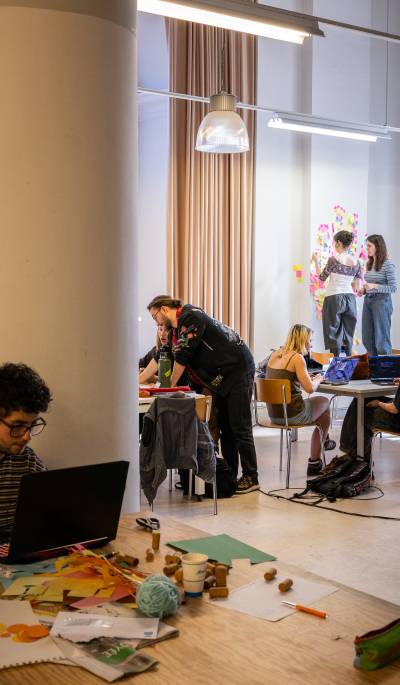
In Studio Design for Impact, you will be introduced to contemporary design practices aimed at social impact and apply these insights to a practice-oriented project addressing a real-world social challenge. Working in a multidisciplinary team, you will explore how design can contribute to systemic change in areas such as climate, healthcare, inclusion, democracy and wellbeing, on behalf of an external client. You will learn to design from a broad perspective, paying attention to voices in society that are often unheard. In doing so, you will take into account both people in vulnerable positions and non-human perspectives, such as those of plants, animals and the planet. You will develop a design practice that goes beyond the creation of products, buildings or services, and learn to act as a facilitator, researcher, connector and system changer. For the studio Design for Impact (24 stp) you commit to two days a week, on Wednesdays and Thursdays.
What will you learn?
- thinking in terms of systems rather than isolated solutions
- designing on the basis of social and environmental values
- working with complex and conflicting interests
- co-creating with diverse stakeholders
- designing, testing and measuring impact
- facilitating societal transitions
Van wie?
- Systemic design by Esther Noëth (Systemic Design Lab, UAntwerpen)
- Design Anthropology & Impact narrative by Tina Lenz
- Participative design by Siri Zomerplaag
- More-tha-human design by Charlotte Lammens
- Impact mission statement by Jill Mathieu (goodcopy.ink)
- Design methodologies, (inter)personal and coaching skills through Ingwio d'Hespeel, Edith Goddeeris and Fabienne Beernaert
Impact Gatherings
Breakfast sessions held throughout the year featuring inspiring speakers, where you’ll also get to know the impact community. We look forward to welcoming you to our Impact Gatherings, which we organise in collaboration with the service design agency Twisted Studio.
Additional modules
- IMPACT PROJECT (6 credits): Carry out a personal impact project or piece of research, or prepare your impact start-up. (on Tuesday mornings)
- BIODESIGN (6 credits): a series of hands-on workshops that fully immerse you in the world of bio-based materials, led by science artist Matthijs De Block (on Friday, semester 2)
- TRANSITION ATELIER - SUSTAINABLE & DEEP (6 credits): Delve deeply into living systems, social structures and hidden narratives. Work on inner growth as the foundation for sustainable, visible change. (on Tuesdays, semester 2)
- IMPACT INTERNSHIP (6 or 12 credits): Take up an impact-driven work placement (150 or 300 hours) that you arrange yourself.
Video
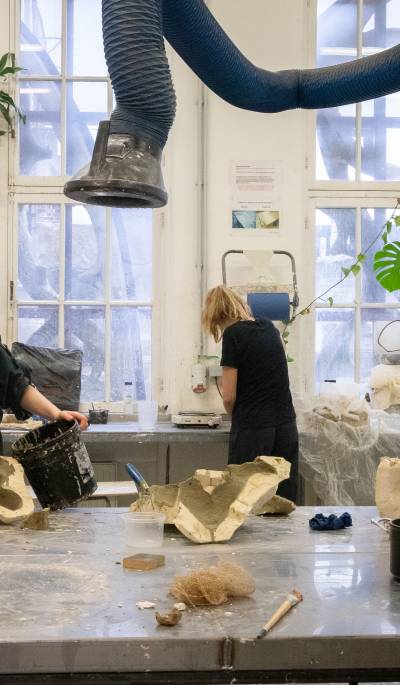
In our workshops, you will find a rich and versatile environment where ideas can grow and take shape.
Whether you work with glass, textiles or ceramics, or immerse yourself in digital practices such as 3D, VR and film, our maker spaces and specialised studios offer the space, tools and guidance to develop your artistic vision.
You work with both traditional crafts and advanced technologies, and you are encouraged to experiment, explore boundaries and acquire new skills.
Students also have access to all workshops across the different LUCA campuses.
Within this open and stimulating context, you collaborate with fellow students, learn from each other’s expertise, and build projects that emerge from research, imagination and the joy of making.
More information about our different workshops

Interested in this course?
Application & entry requirements
In concrete terms
At a minimum, you will follow the core programme worth 24 credits, with contact days on Wednesdays or Thursdays.
A certificate worth 30 credits (part-time programme) means you need to set aside Wednesdays and Thursdays, plus a half-day of your choice. You will follow the core programme and one module of your choice.
You can supplement the core programme with various modules up to 60 credits (full-time programme).
Tip: To work out how much time you’ll need to set aside, use this rule of thumb: 1 credit = 25 working hours.
Kostprijs
The total amount depends on your enrolment:
You are enrolling on the ‘Design for Impact’ Microcredential
- Are you taking ≥ 30 credits, including the core module ‘Design for Impact’ (24 credits)? Upon successful completion, you will receive a certificate.
- Are you taking < 30 credits? You can request a credit certificate for each module you complete.
The cost comprises:
- a fixed enrolment fee (€305.40), a module fee (number of credits taken × €14.60) and a fixed amount for additional study costs (including an Adobe licence, use of workshops, studio materials, etc.) (€265).
Example: Are you taking 42 credits? Then you will pay €1,183.20 in the 2026–2027 academic year.
Are you eligible for the SME portfolio?
As an entrepreneur, you can apply for a grant (20% to 30% funding) through the SME Portfolio to improve the quality of your business. LUCA School of Arts is an accredited service provider.
Enrollment
The Dutch-language Design for Impact course is open to students, alumni and professionals alike.
Where do you have class?
Facilities & campus life
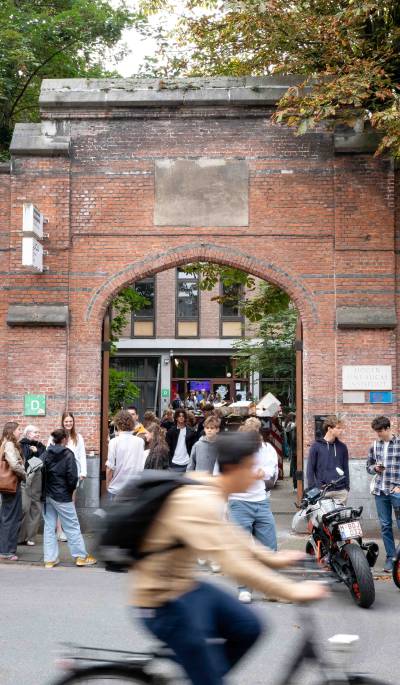
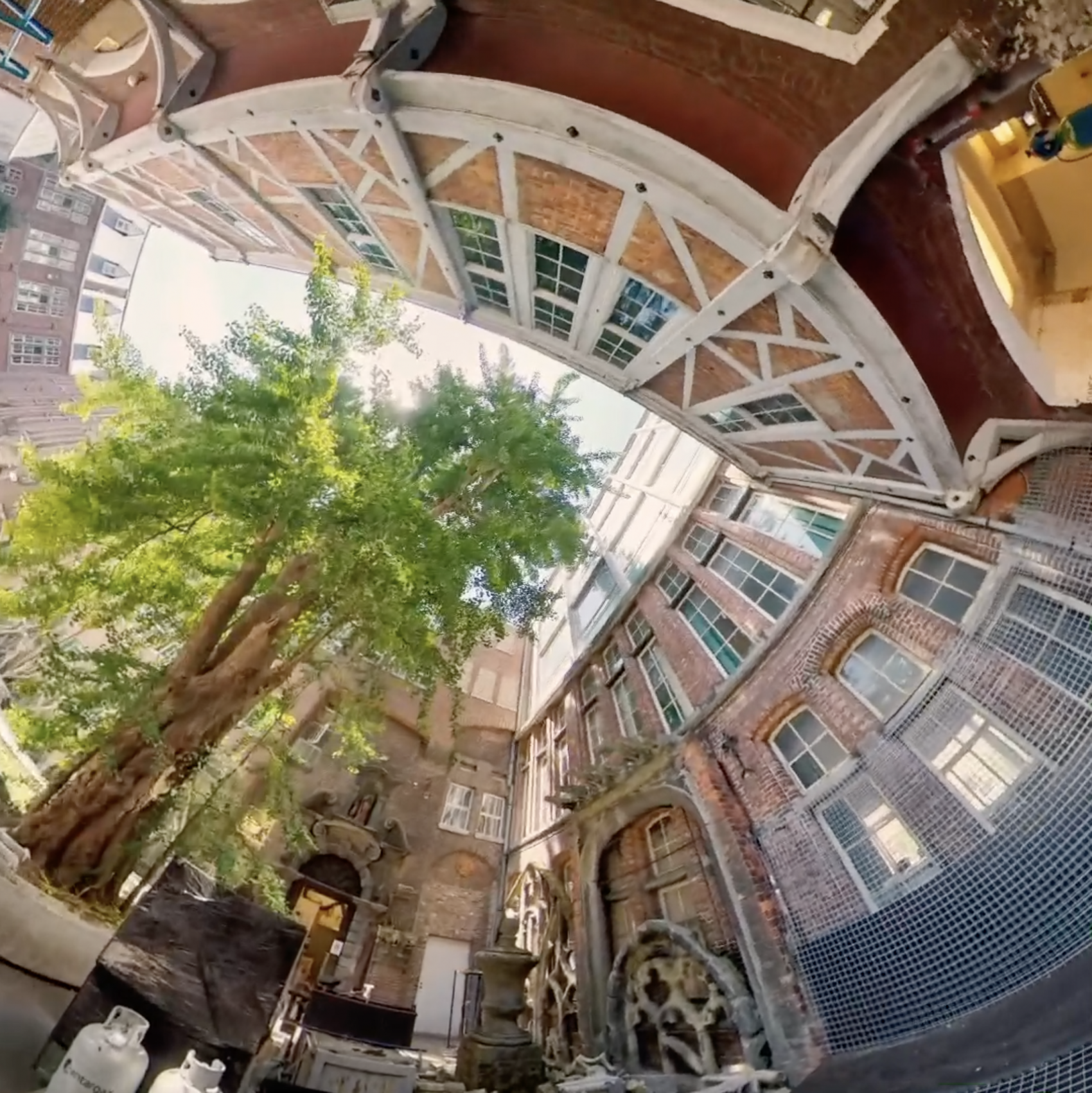
CAMPUS SINT-LUCAS GENT
Alexianenplein 1
9000 Gent
- in the heart of Ghent’s historic centre (or on location)
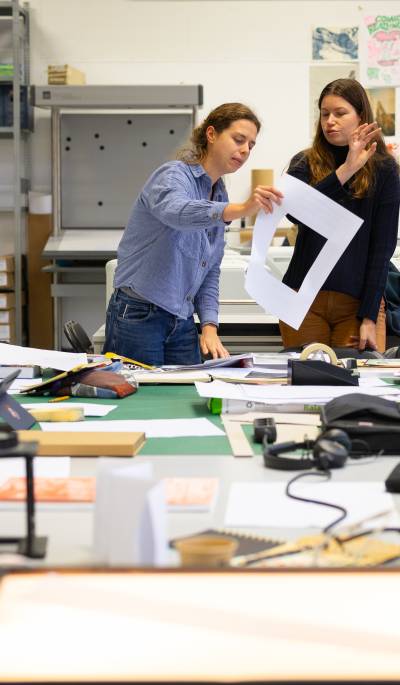
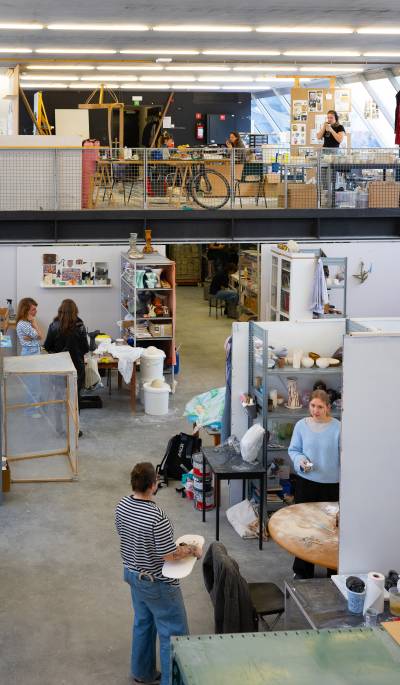
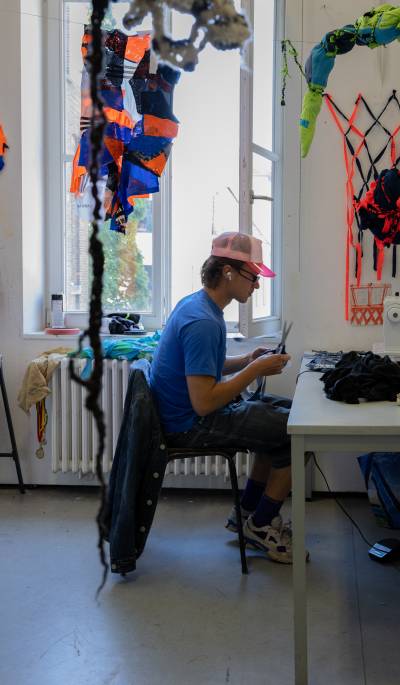
- with a wide range of workshops (3D, audio, wood, metal, photography, glass, graphic design, ceramics, printing and scanning, textiles, video and screen printing), including guidance on the use of materials and techniques
Contact
Further studies and career
Future of Design / Art
The designers and artists of tomorrow operate in a world of complex social and environmental challenges. They design not only for users, but also for communities, ecosystems and future generations. They combine creativity with systems thinking, collaborate seamlessly across disciplines and know how to facilitate, guide and shape change.
With their inquisitive approach, imagination and sensitivity to what lies beneath the surface, they develop new products, services, experiences and systems. They make social issues tangible, bring together diverse perspectives and open up space for new ways of thinking, working and living together.
Design and art play an active role in social transitions: they help us understand complex systems, explore alternative futures and contribute to an inclusive, regenerative and just society.
After completing the programme, you can work as a social designer, service designer, systemic designer, policy designer, facilitator of co-creation and transition, creative strategist, socio-spatial practitioner, eco-designer, biodesigner, impact entrepreneur or artist-anthropologist.
Or you might create a role that doesn’t yet have a name.




Staff
You will learn from a network of professionals, researchers and lecturers who share their expertise through workshops, masterclasses and practical projects. They will challenge you to deepen your design practice, broaden your perspective and further develop your role as a designer of social change.
Tina Lenz initiates participatory projects grounded in cultural sensitivity, with a focus on the process of creation and the collective exploration of alternative possibilities. As a design anthropologist, she is fascinated by the way in which people shape their lives.

Siri Zomerplaag is a social designer with a passion for complex sustainable and societal transitions. Siri is a practice-based researcher at LUCA and works alongside Charlotte Lammens on a caring energy transition.

As a design researcher, Charlotte Lammens is curious about how humans and non-human life forms can learn to coexist once again, and how shared, caring practices can emerge at a time when familiar frameworks and narratives are coming under increasing pressure. Charlotte is a practice researcher at LUCA and is collaborating with SIri Zomerplaag on a caring energy transition.

Tackling complex problems and making a difference. Together with others. That is what drives social entrepreneur Peter De Pauw of Strategies & Leaders. His strategy? To make organisations strategically stronger so that new established values emerge that make the world a better place.

Tomas De Groote is an impact expert at the Social Innovation Factory. The Social Innovation Factory accelerates and promotes social innovation and social entrepreneurship in Flanders and Brussels. As a process manager, he supports social innovators and social entrepreneurs in the areas of impact, social business modelling, funding mix and scaling scenarios.
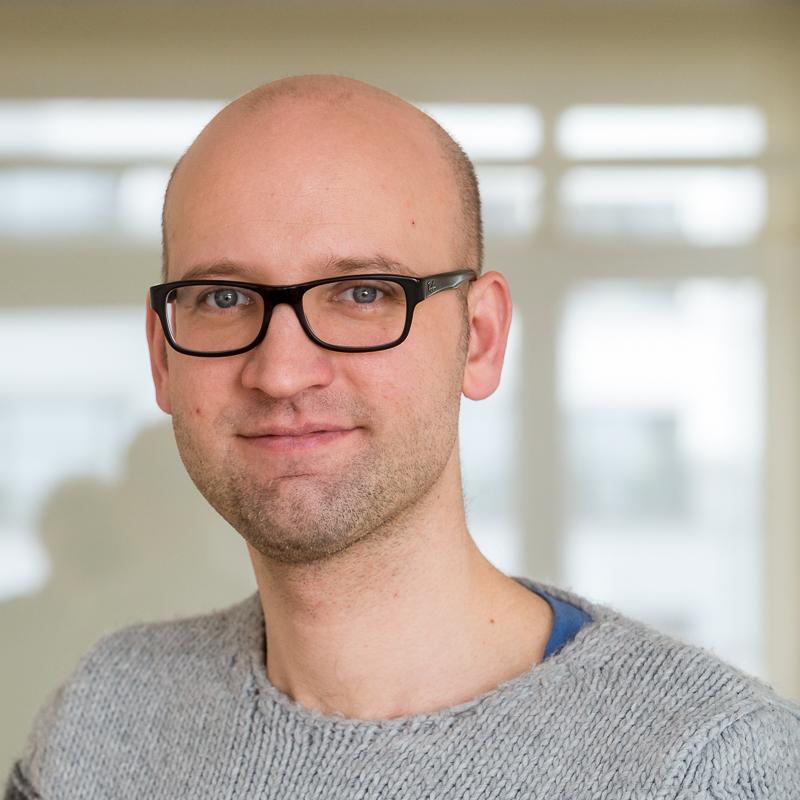
Lien De Ruyck is a future and transition strategist at ELDERS, working with anyone who wants to take sustainable and regenerative action. A writer and speaker who aims to make a regenerative future irresistible. An adventurer and advocate for nature.

Jill Mathieu is a woman of her word. And when she gives someone her word, she wants it to mean something. That’s why she and her goodcopy.ink collective of copywriters work for brands that use her alliteration, oxymorons and Oxford commas to make the world a little bit better.
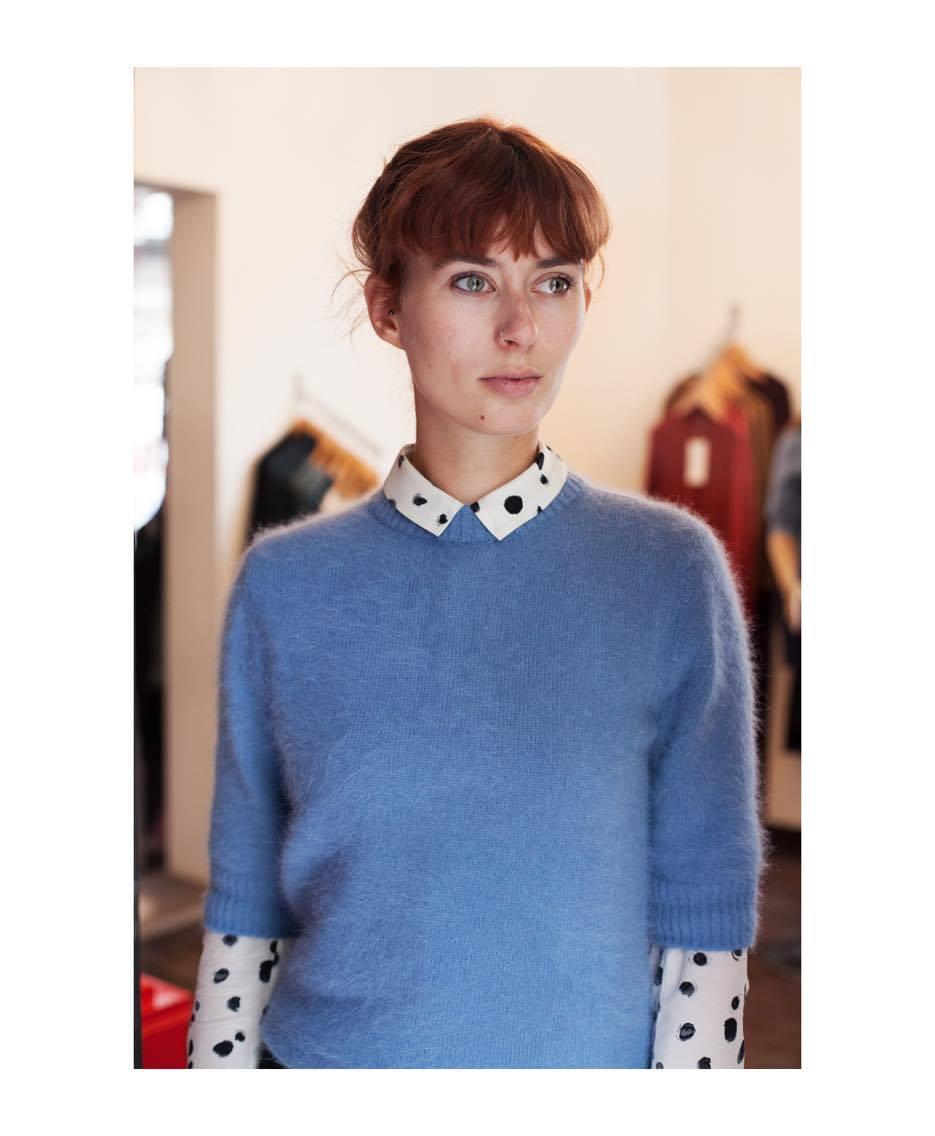
Matthijs De Block is a bio-artist working at the intersection of art and science, with a focus on micro-organisms (bacteria, yeasts, moulds). He is a lecturer on the biodesign module and a practice-based researcher at LUCA.

Fabienne Beernaert is a lecturer and researcher at LUCA. In both her research and her teaching practice, she focuses on lifelong and collaborative learning, personal development and regeneration. She is a firm believer in the cross-fertilisation of disciplines, student empowerment, co-creation and the crossover between education, professional practice and research.
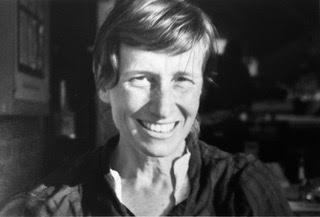
Edith Goddeeris strengthens the team through her expertise in coaching and communication skills. Communicating with impact – that is her focus. She will equip you with the necessary interpersonal and personal skills to work together smoothly and productively by creating a coaching environment with a culture of constructive feedback. Edith also works as a (training) actress and as a communication trainer at Klein Barnum.
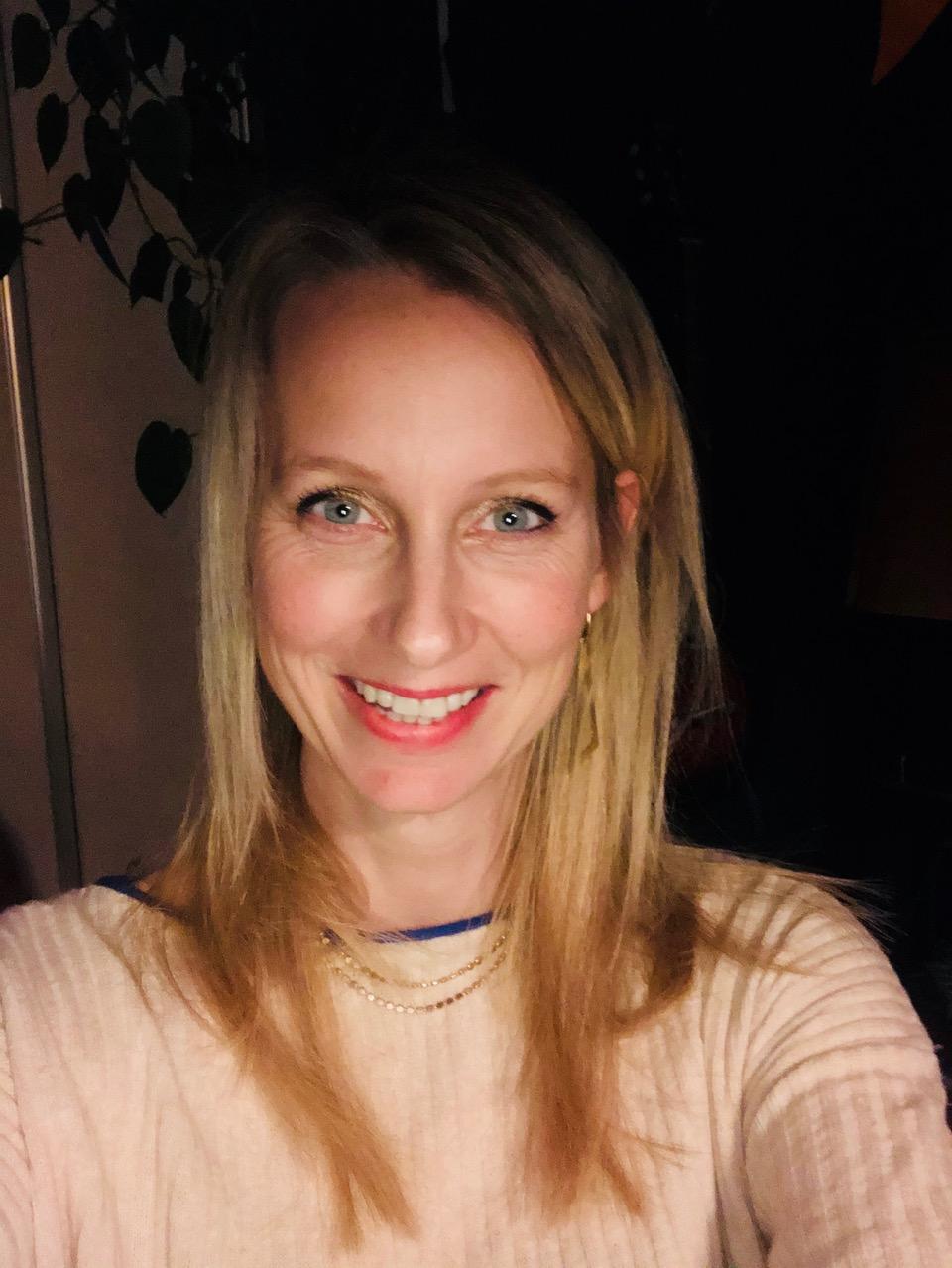
‘My specialism is not specialising,’ is something you often hear Ingwio D’Hespeel say. ‘My favourite place is at the crossroads where different disciplines meet.’ Ingwio has a background as a civil engineer and architect, is a musician and designer, is fascinated by physics and intangible heritage, and has an unquenchable passion for educational innovation. So there are plenty of crossroads!
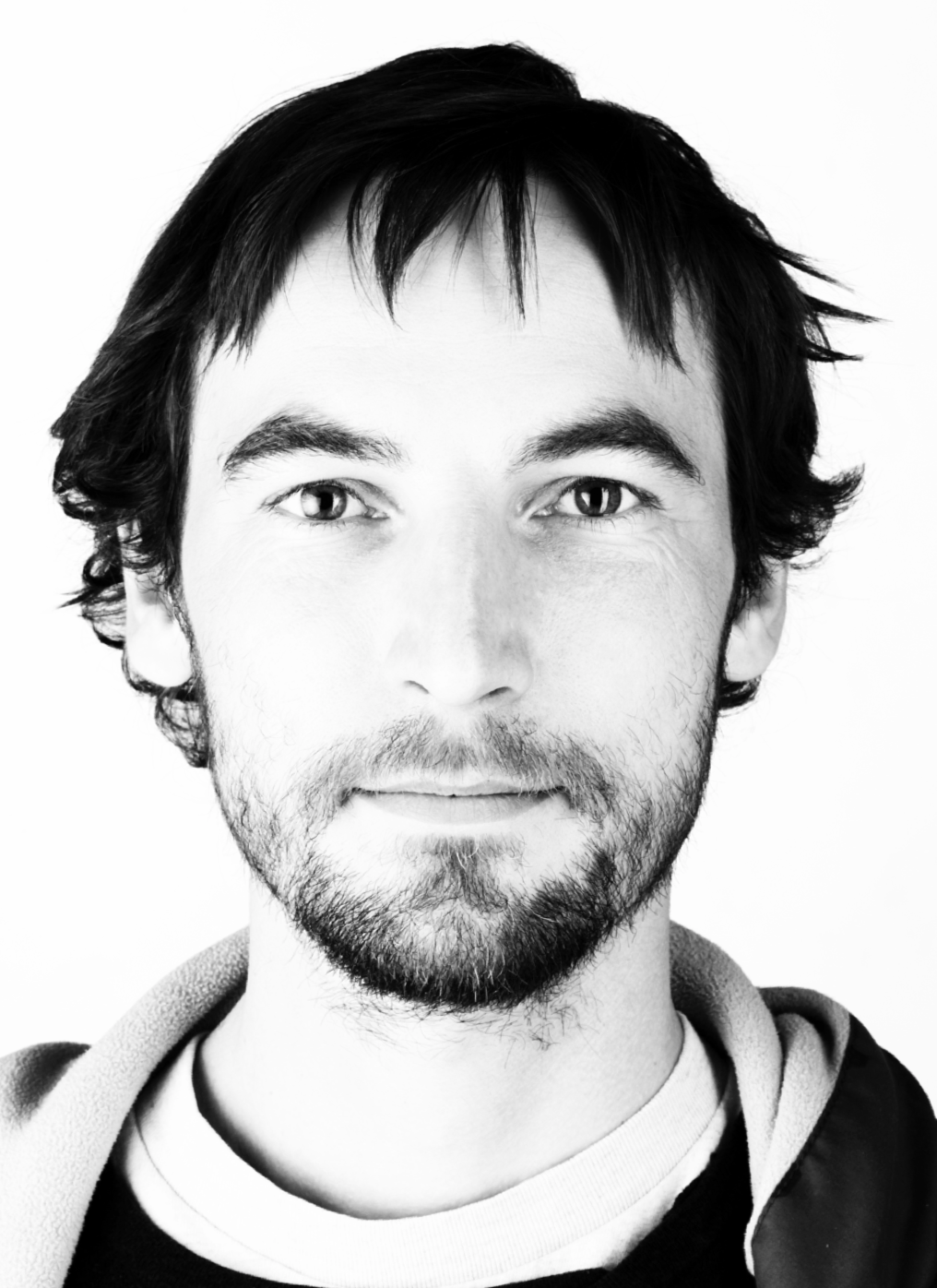
Partners
Together, we can make a bigger impact! That’s why we’re working hard to build an enthusiastic and diverse impact network: creative agencies, impact organisations, accelerators, social entrepreneurs, start-ups, local authorities, other study programmes, …
ELDERS Lien and Jorn, strategists for the future and transition, write captivating stories and visions that make a regenerative world irresistible.

Creatives for goooooooooooood 's mission is to put the SDGs on the desk of every creative, and in every meeting room they enter.
Sociale InnovatieFabriek accelerates and promotes social innovation and social entrepreneurship in Flanders and Brussels.
Strategies and Leaders is a cooperative strategic consultancy with years of experience in driving strategic processes and their implementation. Strategies and Leaders works exclusively with organisations and companies whose mission is to create a better world.
Goodcopy.ink is a copywriting collective. They write great copy for great people.

Volmaakt is building an inclusive world through the power of design. Our design label brings together designers and social enterprises to develop socially sustainable design products.

ToolBox and its volunteer professionals help social, environmental and cultural organisations to acquire new skills and develop tailor-made solutions.
We are bigtrees. A consultancy and communications agency that focuses on sustainability through three pillars: consultancy, branding and go-to-market.
Interested in this course?
Quality is LUCA’s driving force
If the fundamental attitude of the policy plan implies that ‘quality is our driving force’, and that every aspect of the policy can be assessed against this, then LUCA undeniably aims to build and nurture a strong quality culture: a culture based on trust in people with talent and expertise, and aimed at valuing, inspiring, and improving.
The formal quality framework for study programmes within LUCA was named KOPERA, which stands for: Critically Analyzing the Quality of Study Programmes with Peers in Self-Direction.
For KOPERA, LUCA starts from a vision of quality assurance that stems from trust and is aimed at valuing, inspiring, and improving.
During the six-year KOPERA cycle, each study programme receives a panel of critical friends who review the implementation of the quality characteristics and examine how the programme contributes to the general LUCA policy.
The culmination of KOPERA is the ultimate assurance of programme quality. The core question here is: "does the study program have a good quality culture that follows the ‘plan-do-check-act’ cycle?"
LUCA publishes a quality sheet for every study program. You can find this on the 'Quality Assurance' page.
#WeArt