
Exchange programme in the Bachelor Interior Design
30 ECTS / 1 semester / English
Sint
Sint
Interior Design Exchange
Bachelor
When choosing Interior Design, taught at our campus Sint-Lukas Brussels and our campus Sint-Lucas Ghent, you'll be challenged to immerse yourself in spatial design as a whole.
Curriculum
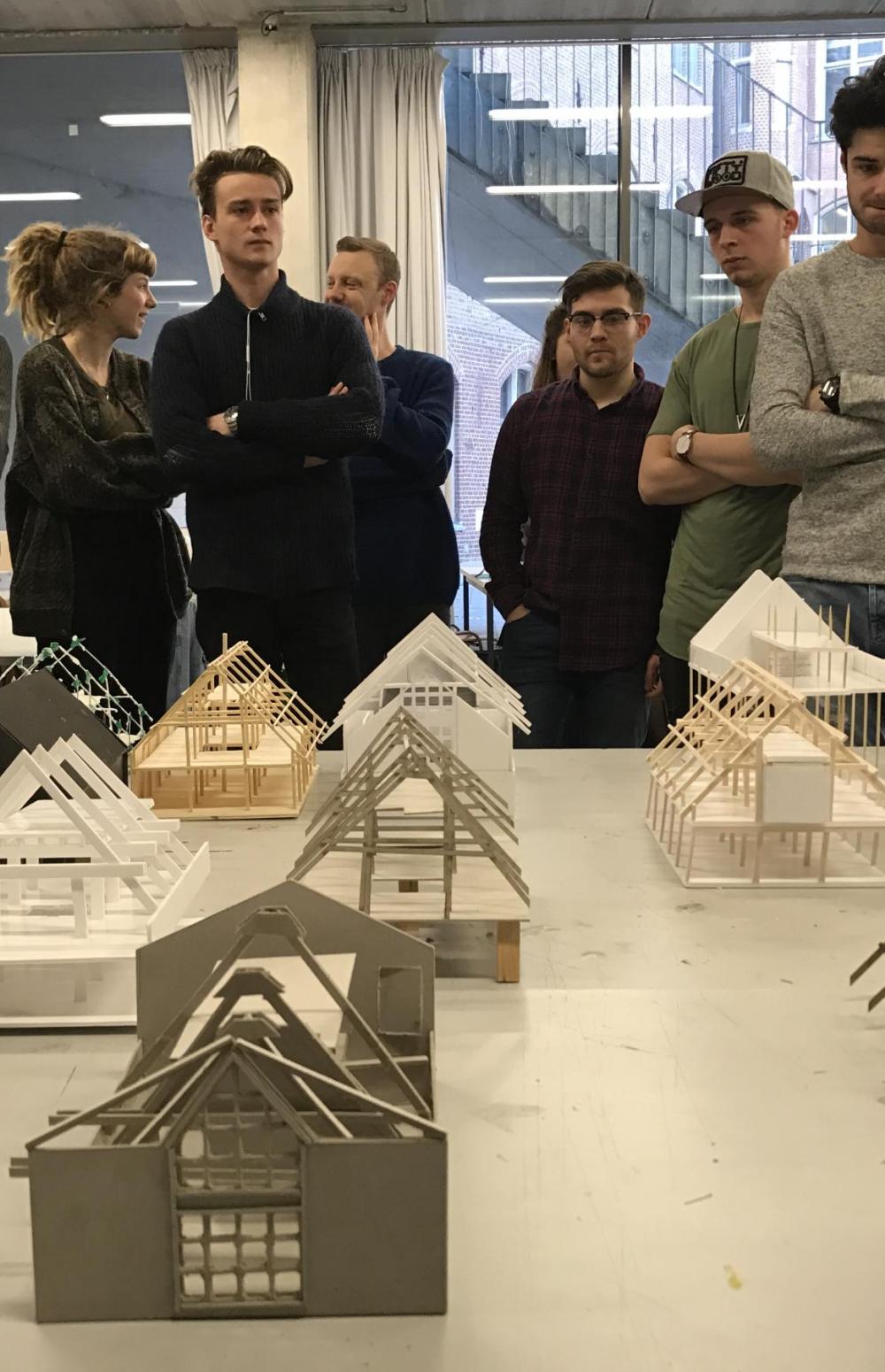
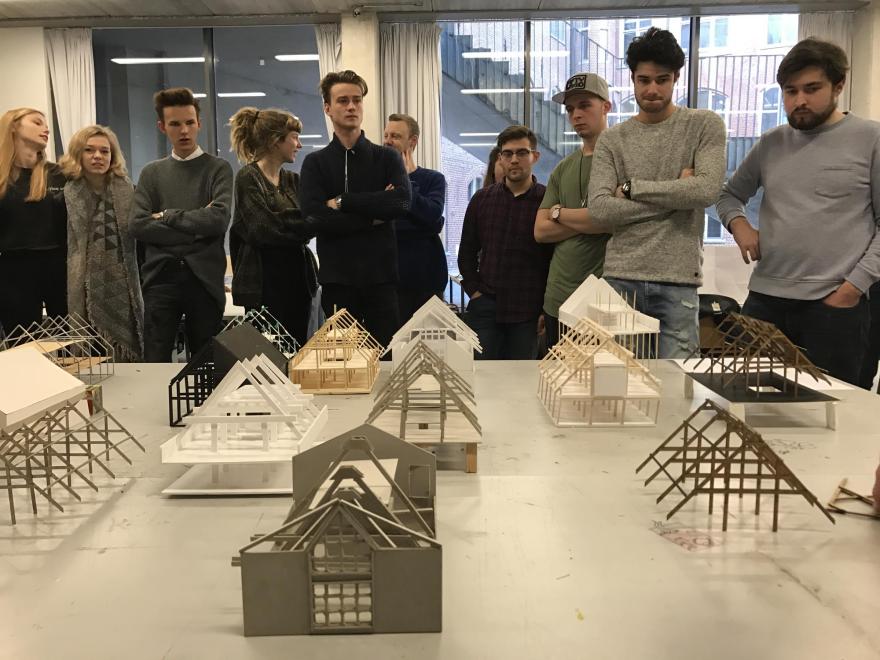
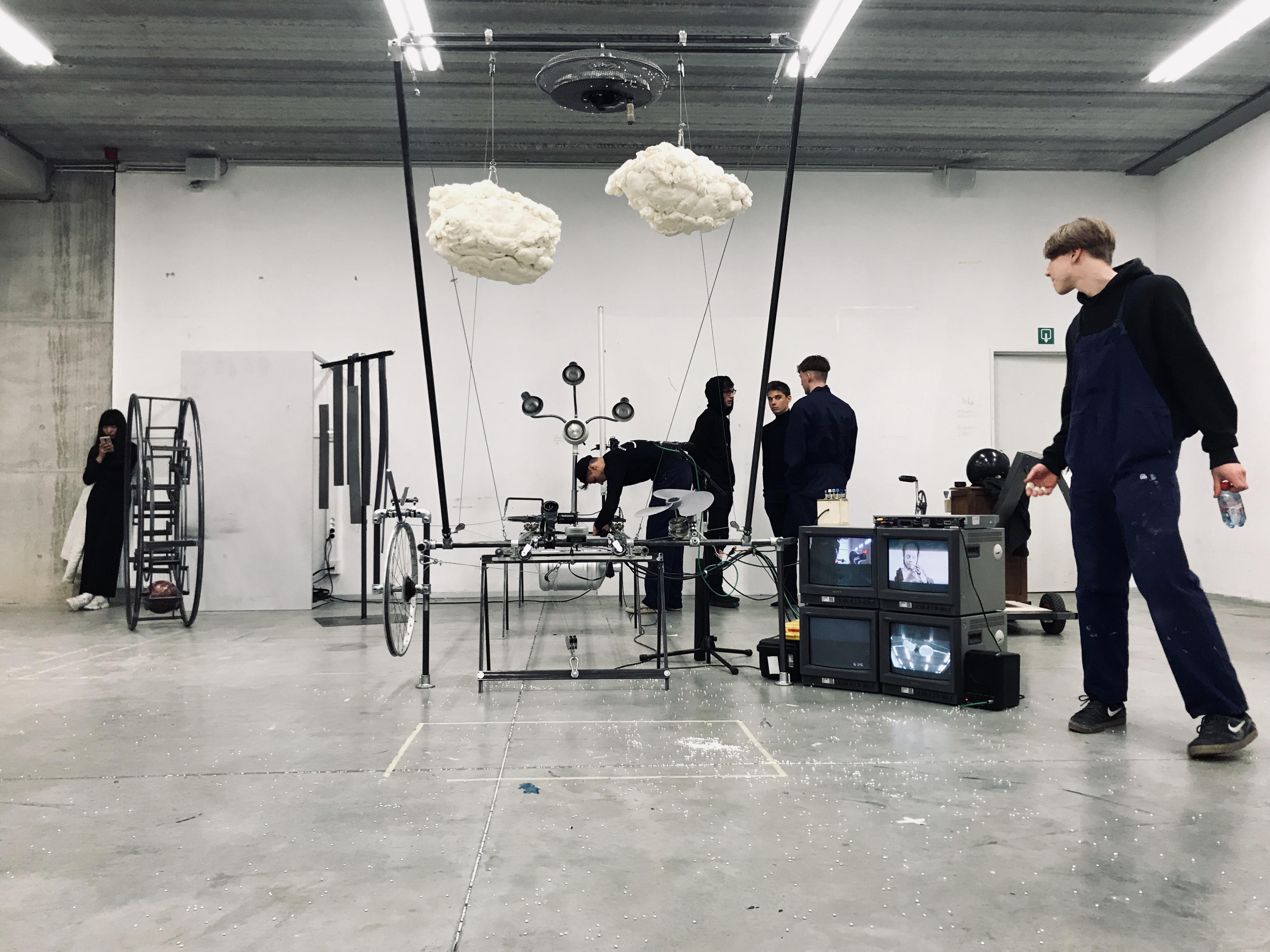
Interior Design is a 3-year professionally oriented spatial design course. A thorough technical and cultural training goes hand in hand with a significant amount of practice based learning. The programme concentrates on interior design, installations, scenography, furniture design and object design. Students are encouraged to develop their talents and interests and to thus find their place in the professional field of interior design. LUCA offers this programme in Ghent and Brussels. The course programme on both campuses is identical. Students from both campuses jointly take part in workshops and excursions.
By hands-on learning you'll discover which design methods and fields of activity suit you best. The singularity and identity of each student form the basis for becoming a (self)critical and authentic designer.
Programme for exchange students: Exchange students are welcome to join the programme in 3BA (first semester).
After taking part in an interactive introduction week, students start the semester with the LUCA work placement programme (LUCA-Upstairs) which will run during the first few weeks. Luca-Upstairs is an internal professional agency in the center of Brussels. You'll focus on social and cultural (real-life) projects where you go in depth into these projects by exploring good practices, among other things. One example could be learning how to design for a vulnerable group of people or how to design a well-being space for various social groups.
Working together (in team) with real clients, partners and target groups is a challenge and an excellent learning process for your development, in which social service and sustainability are central!
After this intensive start, you continue your programme at the campus of your choice. Among other things, you’ll learn to develop a prototype based on an idea you designed earlier (furniture/ scenography/ object), you’ll learn to analyse and investigate a given context and actively participate in cultural visits (lectures, biennials, exhibitions, dance and music performances, guided tours or interior visits).
First semester
| Component code | Course name | ECTS credits | Language |
|---|---|---|---|
| ( | English Cultural Module Brussels "Made in Belgium" | English) | |
| K44312 | Designstudio Realization | 6 | Dutch with English support |
| K44311 | Designstudio Research | 5 | Dutch with English support |
| K43929 | Cultural Participation | 4 | Dutch with English support |
| K44313 | LUCA Upstairs Internship Office | 10 | Dutch with English support |
| K44594 | Interior Design Project | 5 | Dutch with English support |
| Total | 30 |
Note: To see full description of the courses, click here. Keep in mind, this page is not definitive, changes might still occur.
Discover LUCA’s workshops
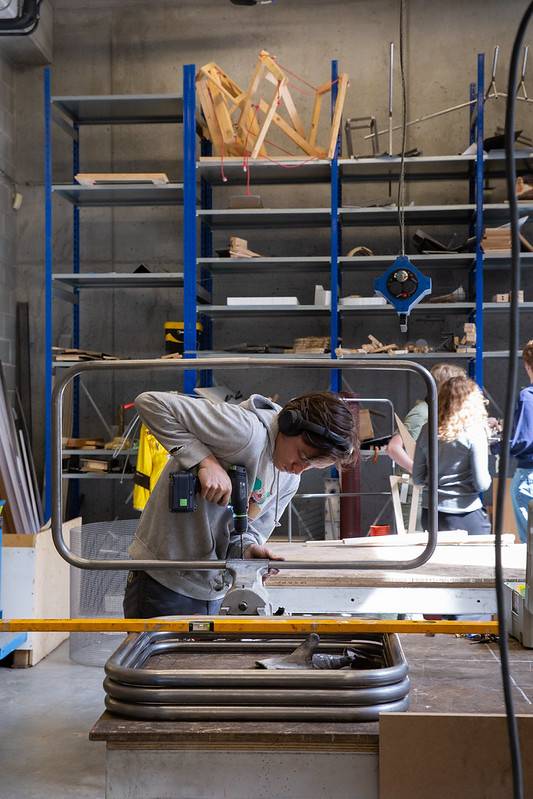
In the LUCAconstruct workshops you work with an extensive range of machinery for wood and metalworking. Together with the workshop technicians, you refine your ideas, choose the right materials and techniques, and translate your design into a physical object — from sculptures, installations and furniture to stage sets.
The workshops offers plenty of room for experimentation, with access to machines, tools and materials. You can also work with 3D printers, laser cutters and vacuum forming machines. Whether you want to design a sculpture, build an installation or develop prototypes, this workshop provides the technical and practical support for your project.
As a LUCA student, you have access to every workshop across all LUCA campuses.
Welcome!
What do you need?
A good command of English (level B2) is required to make the most of your stay with us.
Interested in this course?
Application & entry requirements
All Erasmus+ Exchange Students need to apply via the exchange application procedure of LUCA School of Arts. During your application process, you can indicate the LUCA campus of your choice and the exchange programme you wish to apply for. Notice that not all programmes are open for incoming exchange students in both semesters. An overview can be found here.
- The deadline for the Autumn Semester / full year is April 1
- The deadline for the Spring Semester is October 1
Outcome Exchange Application
The outcome of the application can be expected within 4-6 weeks after the application deadline. Both you and your international coordinator will be informed about the result of your application by e-mail. No need to inquire about the outcome yourself.
Where do you have class?
Facilities & campus life
Campus Sint-Lukas Brussels
Paleizenstraat 70
1030 Brussels
+32 2 250 11 00
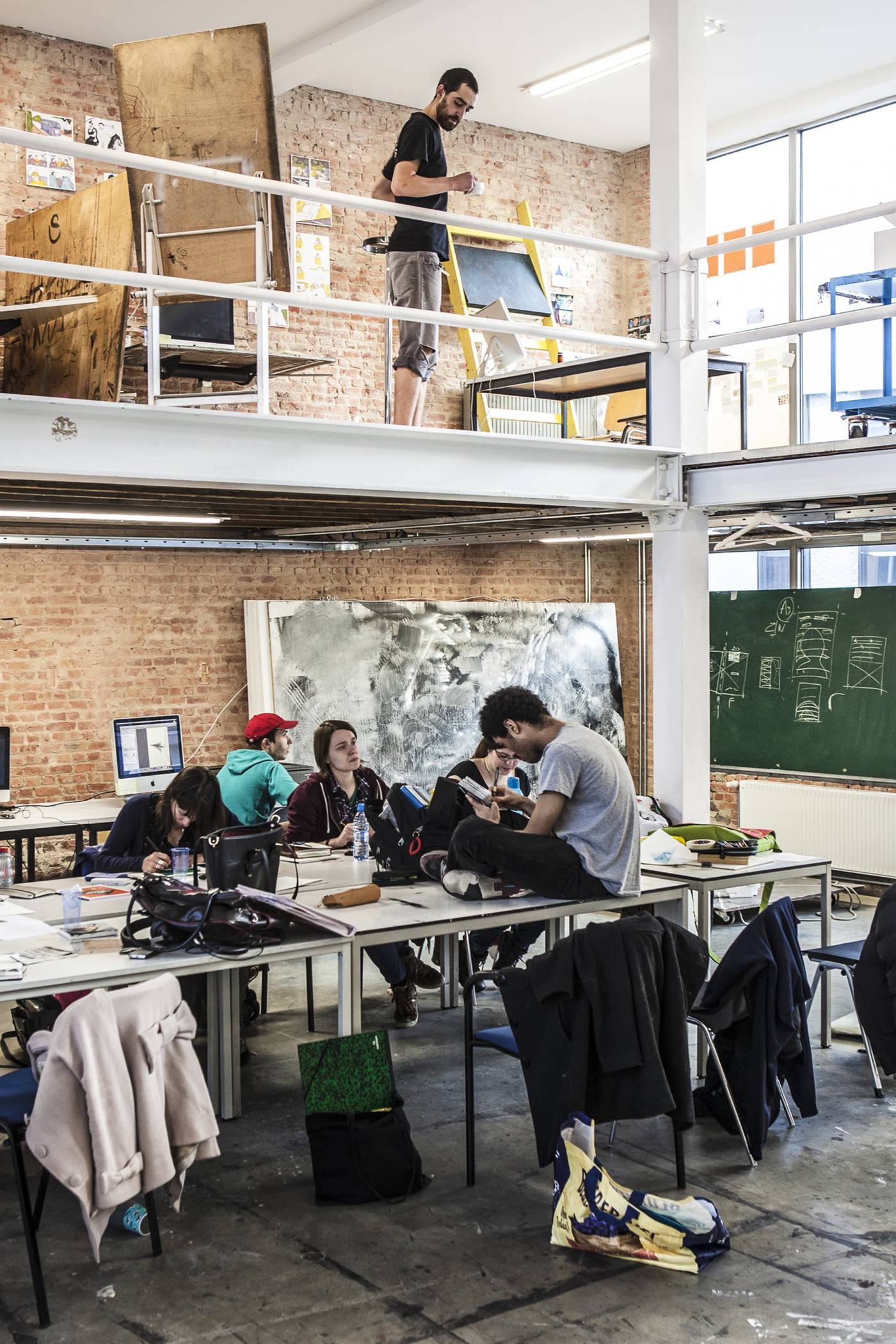
An international campus and an added value to your programme
- A modern and open campus in one of Europe's foremost artistic hubs
- Studio's and workshops, a state of the arts lending service, high tech print rooms …
- A creative community with four educational institutions and over a thousand artist and designers
- An art library renowned for its collection in the country
- At walking distance of the Brussels North railway station
Caroline Goossens
Contact
If you need more information, don't hesitate to contact us:
- Bettie Smets, International Coordinator campus Sint-Lukas Brussels and Narafi Brussels
- bettie.smets@luca-arts.be
- Tel: +32 2 308 27 62
Campus Sint-Lucas Ghent:
- Veerle Van den Abbeele
- Veerle.vandenabbeele@luca-arts.be
- Tel. +32 2 447 10 76
- Machteld Pectoor
- Machteld.pectoor@luca-arts.be
- Tel. +32 9 447 10 75
Visit us
Are you curious about our approach to art education? During our open days, you will get all the information you need, visit the campus, talk to our teaching staff and students ... Still not convinced? Visit our graduation show! During this, on-campus two-day art festival you can experience first hand how good our students really are.
Interested in this course?
Quality is LUCA’s driving force
If the fundamental attitude of the policy plan implies that ‘quality is our driving force’, and that every aspect of the policy can be assessed against this, then LUCA undeniably aims to build and nurture a strong quality culture: a culture based on trust in people with talent and expertise, and aimed at valuing, inspiring, and improving.
The formal quality framework for study programmes within LUCA was named KOPERA, which stands for: Critically Analyzing the Quality of Study Programmes with Peers in Self-Direction.
For KOPERA, LUCA starts from a vision of quality assurance that stems from trust and is aimed at valuing, inspiring, and improving.
During the six-year KOPERA cycle, each study programme receives a panel of critical friends who review the implementation of the quality characteristics and examine how the programme contributes to the general LUCA policy.
The culmination of KOPERA is the ultimate assurance of programme quality. The core question here is: "does the study program have a good quality culture that follows the ‘plan-do-check-act’ cycle?"
LUCA publishes a quality sheet for every study program. You can find this on the 'Quality Assurance' page.
#WeArt