
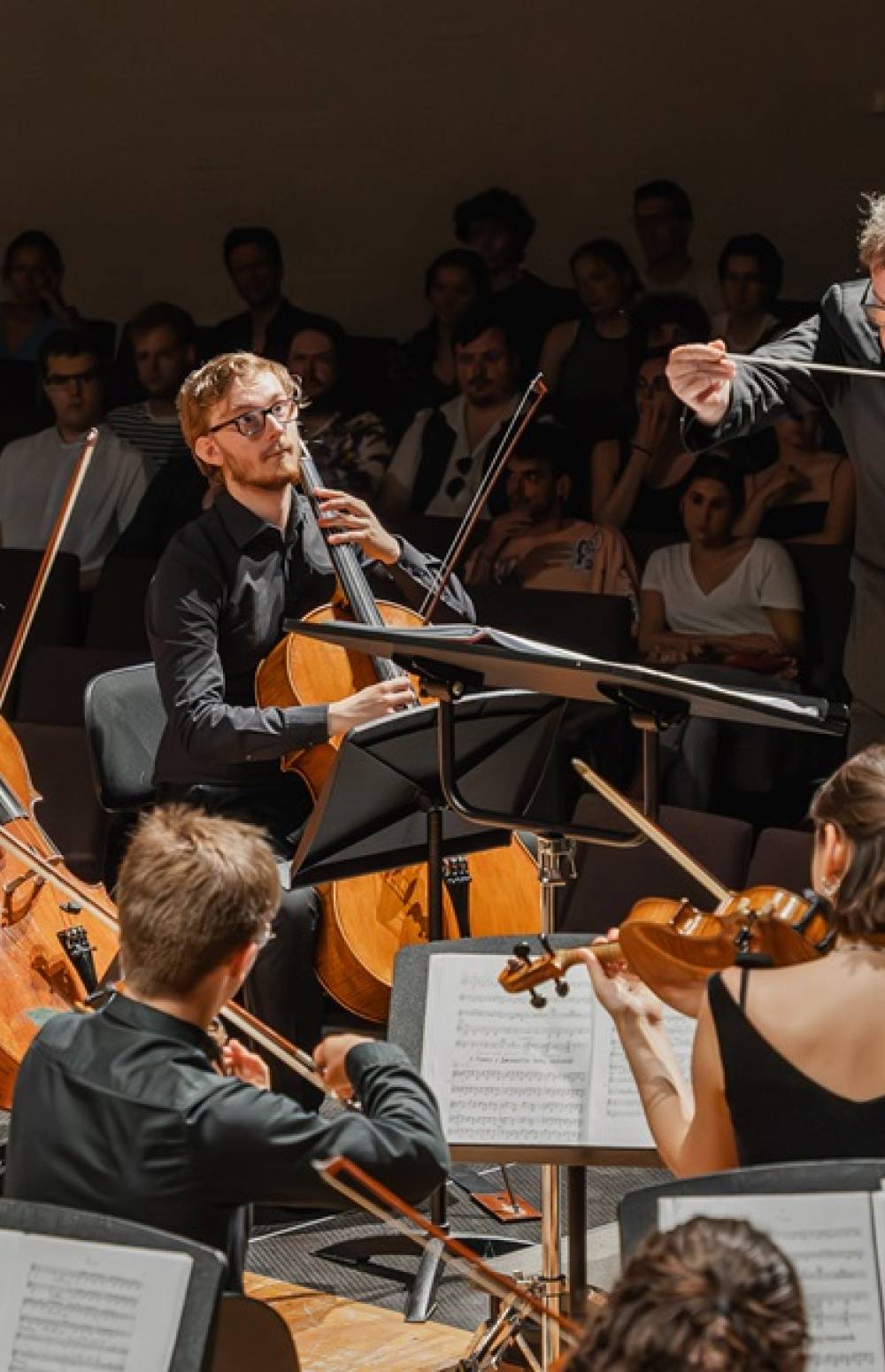
Conducting Bachelor Degree
180 ECTS / 3 years
LUCA Leuven
LUCA Leuven
Conducting
Bachelor
LUCA Conservatory of Music is an internationally oriented music conservatory in Belgium, offering high-level bachelor’s and master’s programs to international students from around the world. With a tradition dating back to 1879 as the former Lemmensinstituut, LUCA is one of the leading conservatories in Belgium for classical music and composition.
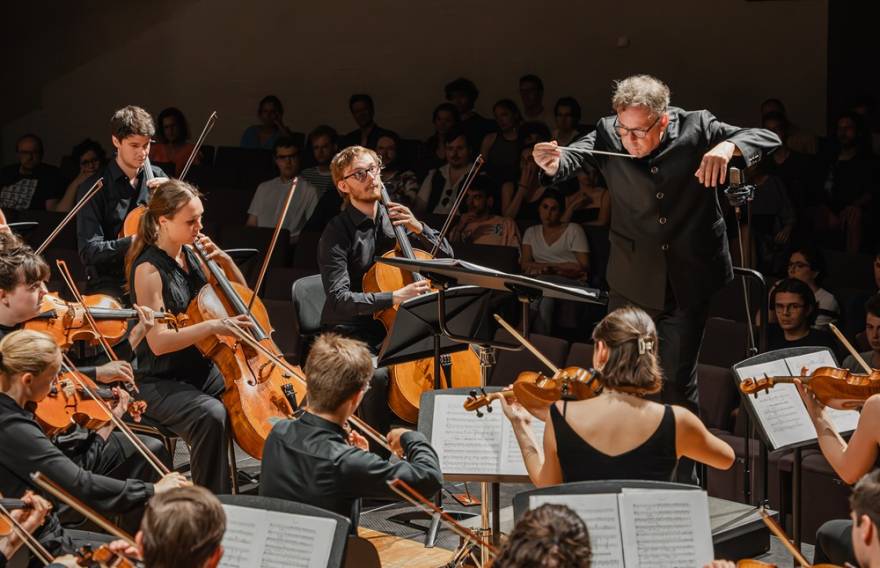
Students in the Bachelor’s and Master’s programmes in conducting can choose between wind band conducting (Hafabra) and symphonic orchestra conducting. Here you will find all information.
If you're interested in choir conducting, we'd be happy to direct you here.
Choir Conducting Concerts & Events
Curriculum
Admission test
We hold two admission tests each year, in July and September. For specific dates, click here.
The entrance exam consists of an ear test and an audition with silent conducting, during which the candidate sings the main parts from the score based on a given repertoire (full details and repertoire can be found here). International candidates have the option to submit a one-take video of their program.
A distinctive feature of this programme is the presence of two specialised tracks led by Luc Vertommen (Hafabra conducting) and Federico Santi (orchestral conducting). Students receive instruction within their chosen specialisation, while regular exchanges between the two classes create opportunities to share experiences, perspectives and expertise. This enriches the learning environment and enables students to develop a broader artistic and professional outlook.
The conservatory maintains close ties with the professional field, offering students valuable opportunities to build connections already during their studies.
The international campus attracts talent from all over the world and provides a stimulating environment for artistic growth. With its extensive infrastructure, the school offers ideal facilities for musical development and creative exploration.
Professors
During the programme, students, regardless of their chosen track, work with both professors.
Federico Santi (Symphonic orchestra)
Curriculum in detail
| Conducting | 24 credits |
| Instrumentation / Arrangement | 6 credits |
| Harmony | 6 credits |
| Practical Harmony | 6 credits |
| Theoretical Studies (Art in Context / Music History) | 12 credits |
| Orchestra / Ensemble | 6 credits |
| Conducting | 24 credits |
| Instrumentation / Arrangement | 6 credits |
| Harmony | 6 credits |
| Programming and Repertoire | 6 credits |
| Practical Harmony | 6 credits |
| Orchestra / Ensemble | 3 credits |
| Theoretical Studies (Art in Context / Music History) | 6 credits |
| Conducting | 30 credits |
| Instrumentation / Arrangement | 6 credits |
| Internship | 6 credits |
| Score Reading / Transposition | 6 credits |
| Theoretical Studies (Art in Context) | 6 credits |
| Electives | 6 credits |
| Conducting | 24 credits |
| Artistic Research | 6 credits |
| Instrumentation / Arrangement | 6 credits |
| Orchestra / Ensemble | 6 credits |
| Professional Toolkit | 6 credits |
| Electives (Workshops / Minors / Interdisciplinary Courses) | 12 credits |
Master 2
| Conducting | 30 credits |
| Instrumentation / Arrangement | 6 credits |
| Orchestra / Ensemble | 6 credits |
| Professional Toolkit | 6 credits |
| Electives (Workshops / Minors / Interdisciplinary Courses) | 12 credits |
For the detailed curriculum and course descriptions, click the link below.

What do you need?
A good command of English (level B2) is required to make the most of your stay with us. Campus Lemmens does not own student accommodation. Therefore, you will have to rent a room on the private housing market for the duration of your stay. To help you in your search, please visit the website of the KUL or contact our student support services.
Interested in this course?
Application & entry requirements
All Erasmus+ Exchange Students need to apply via the exchange application procedure of LUCA School of Arts. During your application process, you can indicate the LUCA campus of your choice and the exchange programme you wish to apply for. Notice that not all programmes are open for incoming exchange students in both semesters. An overview can be found here.
- The deadline for the Autumn Semester / full year is April 1
- The deadline for the Spring Semester is October 1
Outcome Exchange Application
The outcome of the application can be expected within 4-6 weeks after the application deadline. Both you and your international coordinator will be informed about the result of your application by e-mail. No need to inquire about the outcome yourself.
o start our programme, you must meet a few admission requirements. Besides diploma and study credit requirements, there are also additional language and residence requirements for students from outside the Flemish Community. Moreover, you must also pass an Artistic Admission Test.
More information about the admission requirements
Where do you have class?
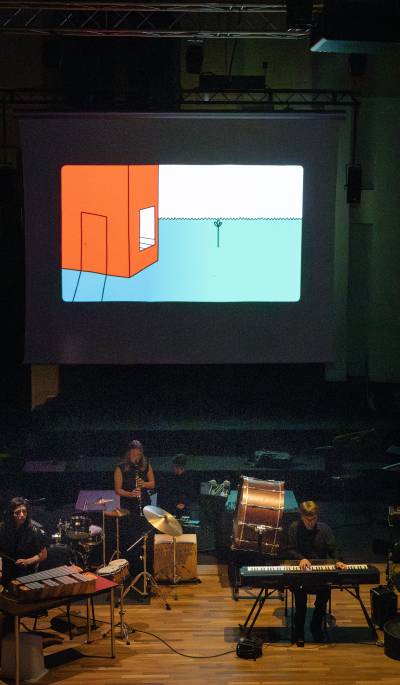
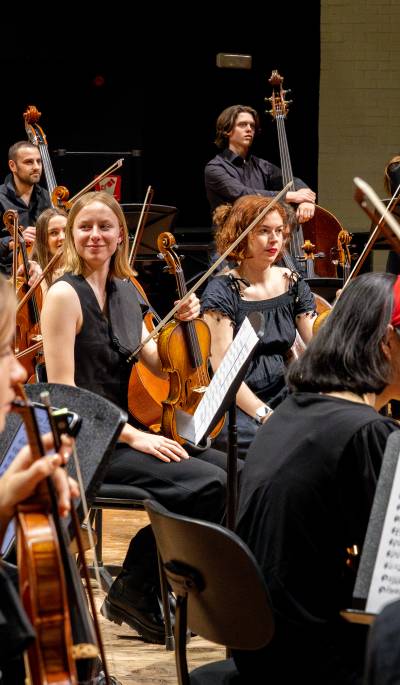
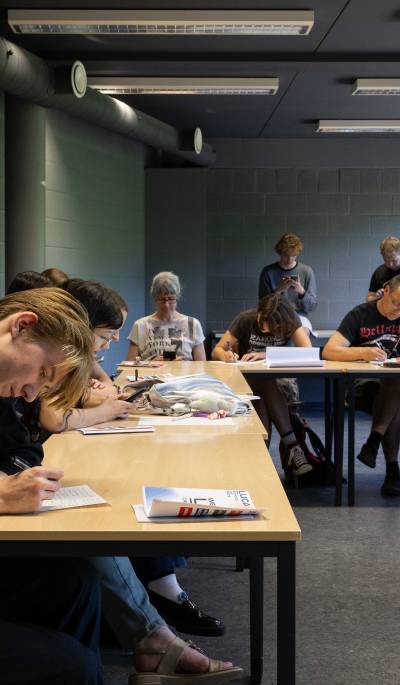

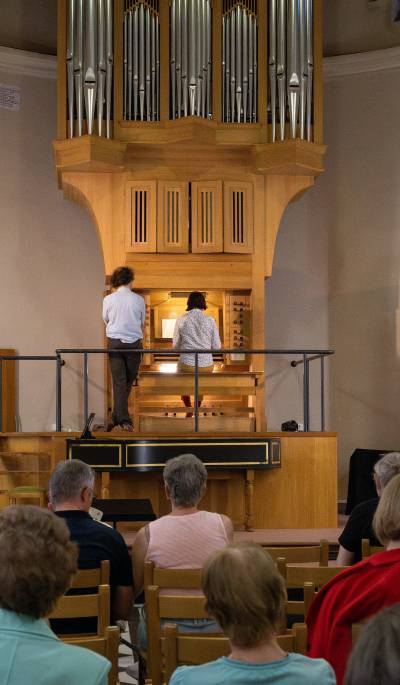
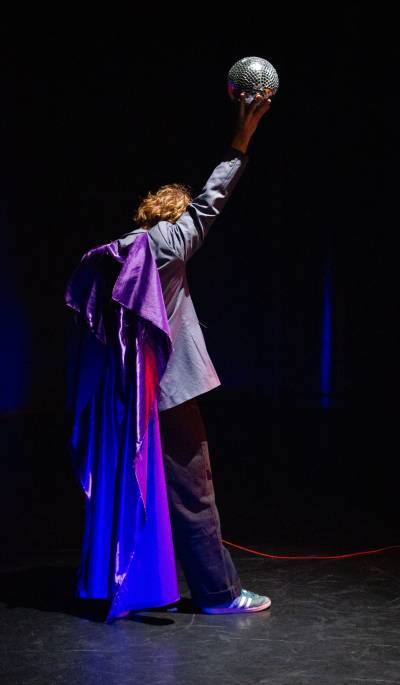
Facilities & campus life
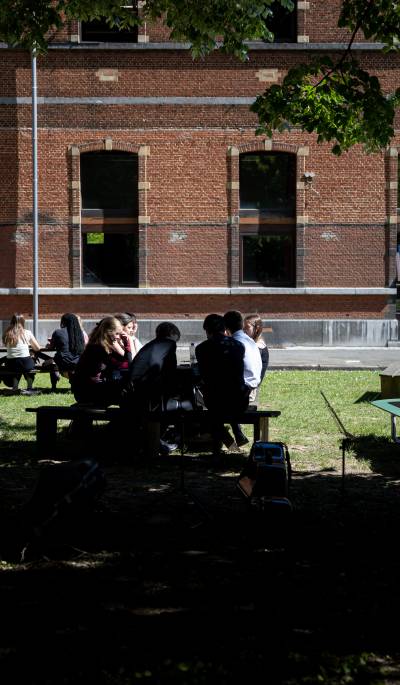
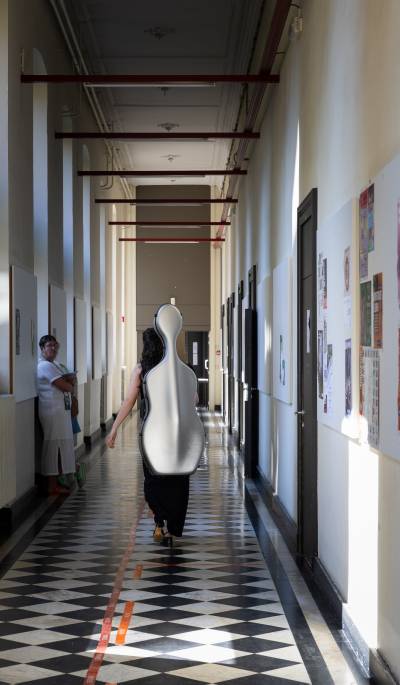
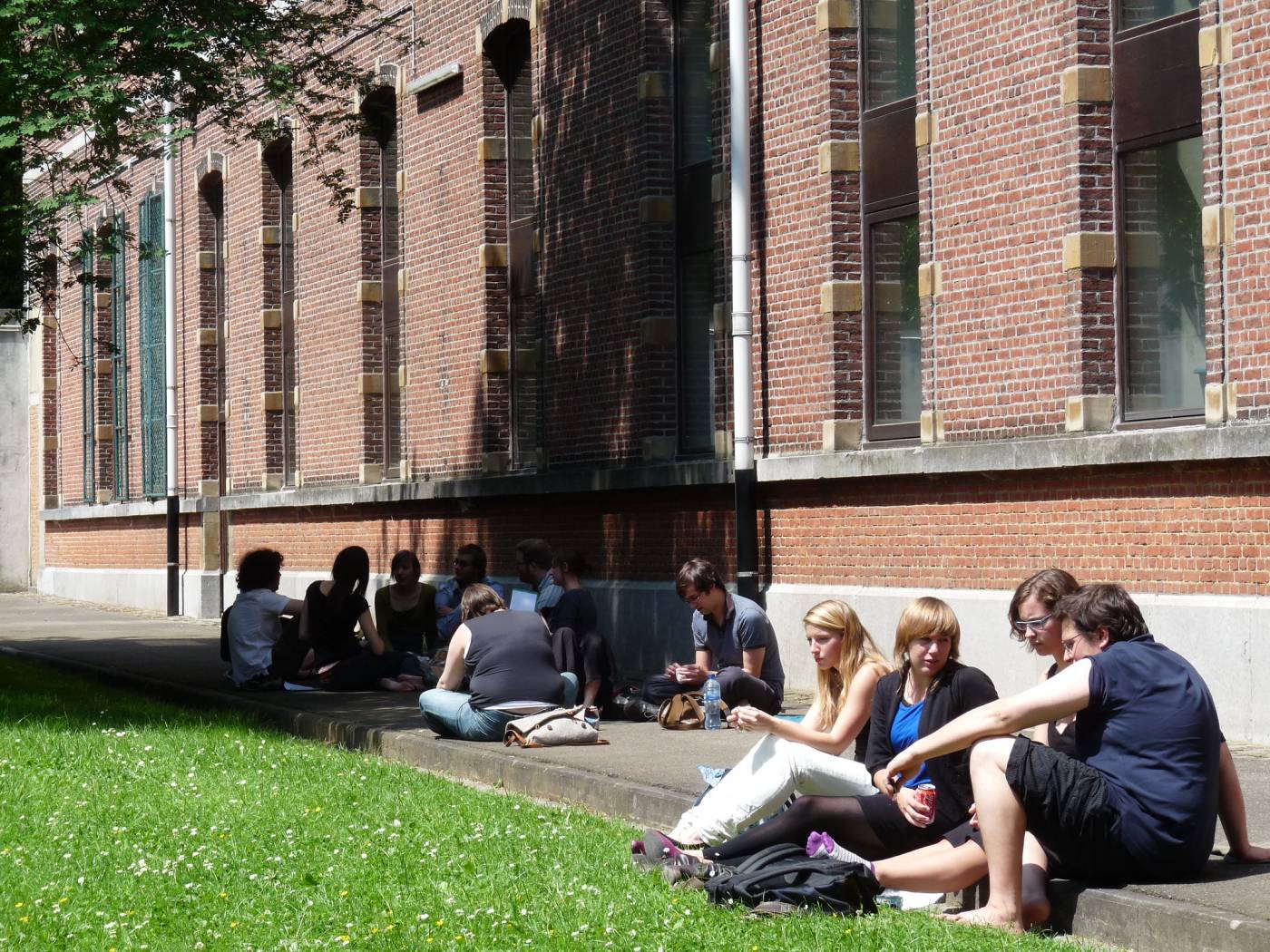
- Our very own campus, situated in a parc in one of Europe's oldest university towns
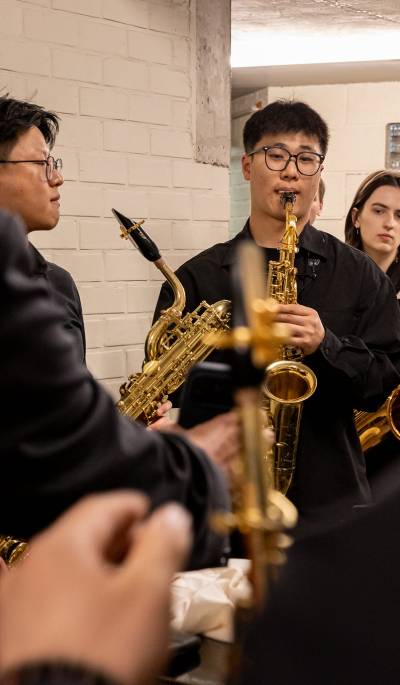
- An artistic meeting space for theater maker and musicians
- A coworking space with rehearsal studio's concert halls and theater venues
- An art centre with concerts, performances and theater shows, lectures and artist talks, book launches, graduation shows and showcases
- An expertise centre for young perfomnce artists with an art library, production support and a lending service
- An intricate network of cultural partners where students rehears and show the results of their projects
Location
Lemmensberg 3
3000 Leuven
info.lemmens@luca-arts.be
+32 2 447 15 00
Contact
If you need more information, don't hesitate to contact us:
International Coordinator Campus Lemmens
Diana Solomonidou
diana.solomonidou@luca-arts.be
Campus Lemmens
Lemmensberg 3
3000 Leuven
+32 2 447 15 00
info.lemmens@luca-arts.be
Interested in this course?
Quality is LUCA’s driving force
If the fundamental attitude of the policy plan implies that ‘quality is our driving force’, and that every aspect of the policy can be assessed against this, then LUCA undeniably aims to build and nurture a strong quality culture: a culture based on trust in people with talent and expertise, and aimed at valuing, inspiring, and improving.
The formal quality framework for study programmes within LUCA was named KOPERA, which stands for: Critically Analyzing the Quality of Study Programmes with Peers in Self-Direction.
For KOPERA, LUCA starts from a vision of quality assurance that stems from trust and is aimed at valuing, inspiring, and improving.
During the six-year KOPERA cycle, each study programme receives a panel of critical friends who review the implementation of the quality characteristics and examine how the programme contributes to the general LUCA policy.
The culmination of KOPERA is the ultimate assurance of programme quality. The core question here is: "does the study program have a good quality culture that follows the ‘plan-do-check-act’ cycle?"
LUCA publishes a quality sheet for every study program. You can find this on the 'Quality Assurance' page.
#WeArt