
Pathway in the Master Audiovisual Arts
60 ECTS / 1 year / English, Dutch
Sint - Lukas
Sint - Lukas
Filmmaking in Brussels
English-taught Master
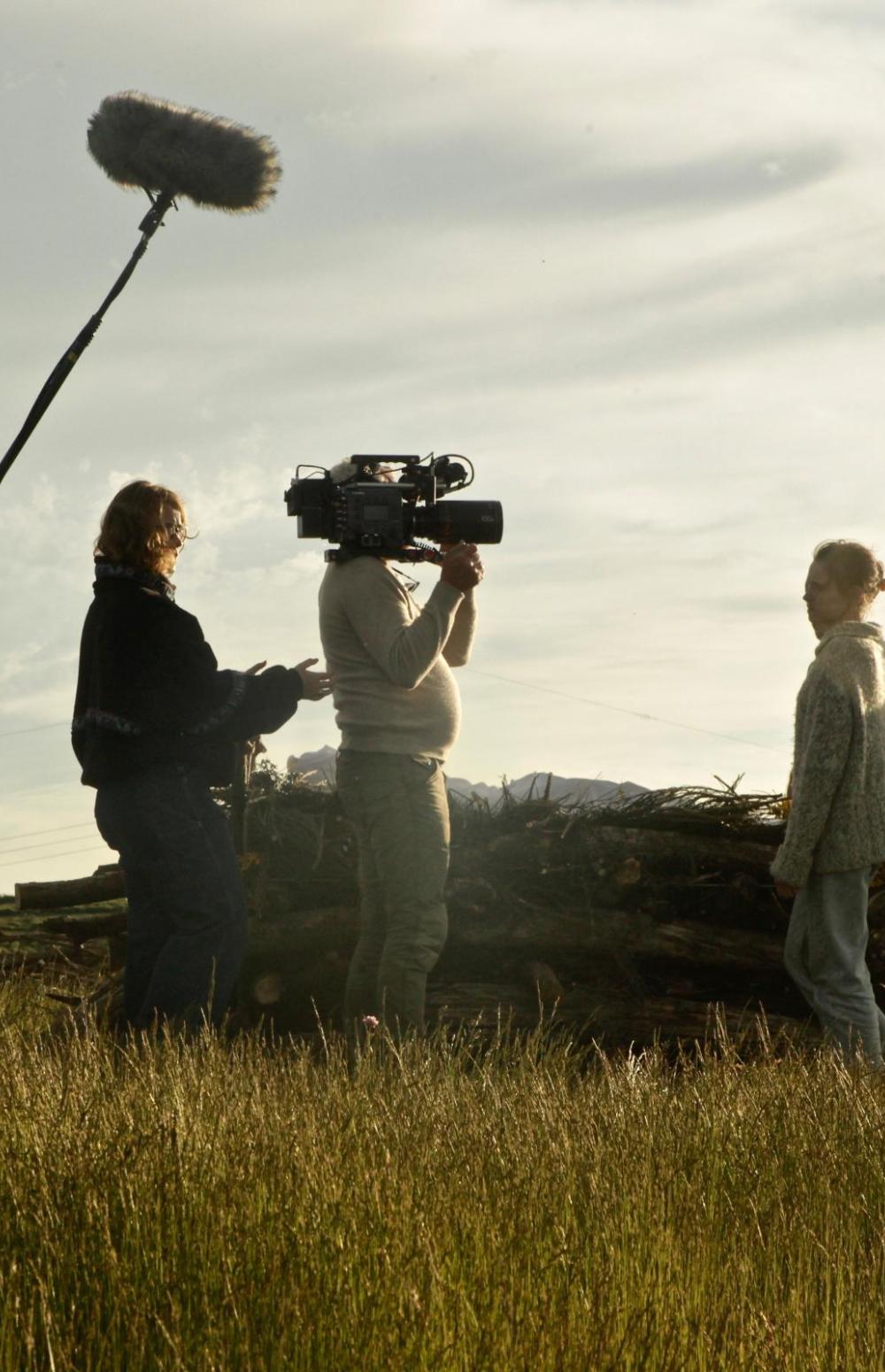
The Master program in Filmmaking offers a one-year, full-time arts education program. Its goal is to build the profile of an independent and professional film maker/artistic researcher whose understanding of contemporary cinema culture is informed by a strong sense of aesthetics and ethics. The student’s individual practice is the basic point of reference throughout the program and leads to the graduation project that includes both an audiovisual work and a dissertation text.
Curriculum
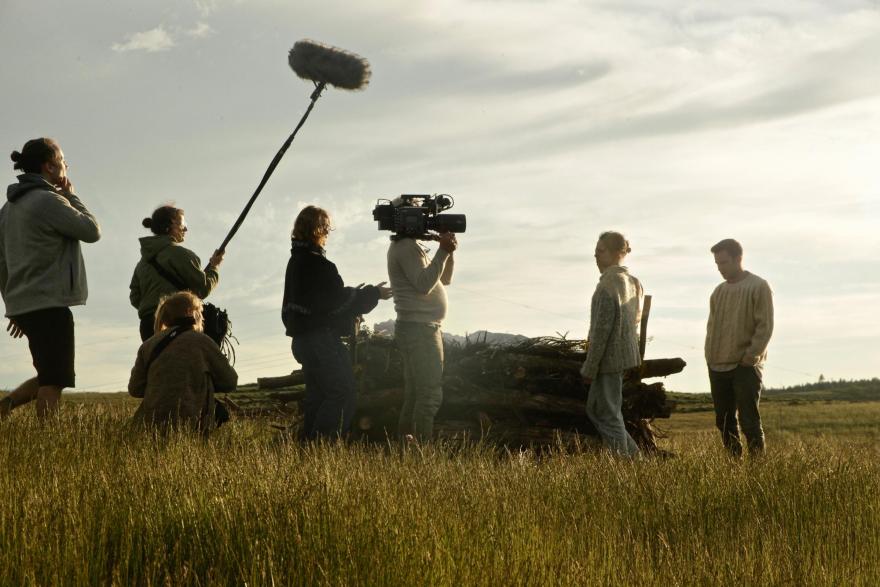
The program puts great emphasis on the interaction between the school’s input and the student’s contribution. It builds on skills gathered in a Film or Audio-visual Arts Bachelor Program and offers no specific training anymore in terms of acting directing, lighting, editing, script writing and so forth. Within the broad framework of cinema (including arthouse film, artist’s film, diverse documentary practices, artistic research and non-generic mainstream moviemaking) it offers instead a continuous program of mandatory activities that includes workshops, seminars, lectures, presentations by visiting filmmakers and visual artists, group presentations, group discussions, film screenings and excursions to exhibitions that offer a wide range of ideas and positions from the contemporary field of cinema culture and audio-visual arts.
Students contribute their own knowledge, sensitivities, skills, aspirations, motivation and commitment. In regular peer to peer meetings, they report and communicate with each other on the progress of their graduation project. By using this input and through ongoing dialogue with tutors, lecturers and fellow students, they develop a critical vocabulary and learn to formulate adequate artistic research questions and responses as well as to reach solutions independently, culminating in the showing of a personal and creative finished audio-visual work and dissertation text, where they demonstrate a personal signature, advanced directing skills and a thorough understanding of artistic research methods.
Video
Mars, Oman, Vanessa del Campo - selected by Visions du Réel 2019
The program is designed to take a closer look at the problems and possibilities that arise when students/future filmmakers develop a work of art. It does not discriminate between narrative or documentary or experimental audio-visual practices. On the contrary, it helps students position themselves in the film practice(s) of their choice and achieve their artistic intentions by understanding the achievements of others. It lets students understand the strategies and methods as well as knowledge and skills involved in the production of audio-visual artwork. Individual practice and reflection are at its very centre: a continuous and independent working pattern that seeks a dialogue with similar as well as different approaches. In this process, the students can rely on a critical dialogue about the work’s artistic, practical and technical dimensions as well as about content matter with personal tutors.
Students develop writing and speaking skills that enable them to express themselves in a critical and nuanced way about their own and other people’s works. The sharpening of cultural knowledge and sensibilities is geared towards the students’ film practices within a research framework that favours the complementarity of classroom and film set, of theory and practice, of thinking and doing.
Video
Trailer Sons of No One, Hans Vannetelbosch - VAF Wildcard Fiction winner 2017
Master Electives
The Master electives form an important part of the Master's programme. LUCA offers a rich and diverse range of research courses, supported by the research units of our campuses in Brussels, Ghent, Genk, and Leuven. In doing so, each campus develops its own research practice, tradition, and thematic focus.
You choose two electives that align with your interests and professional ambitions. Additionally, you may take an elective offered by KU Leuven or its association partners.
Discover LUCA’s workshops
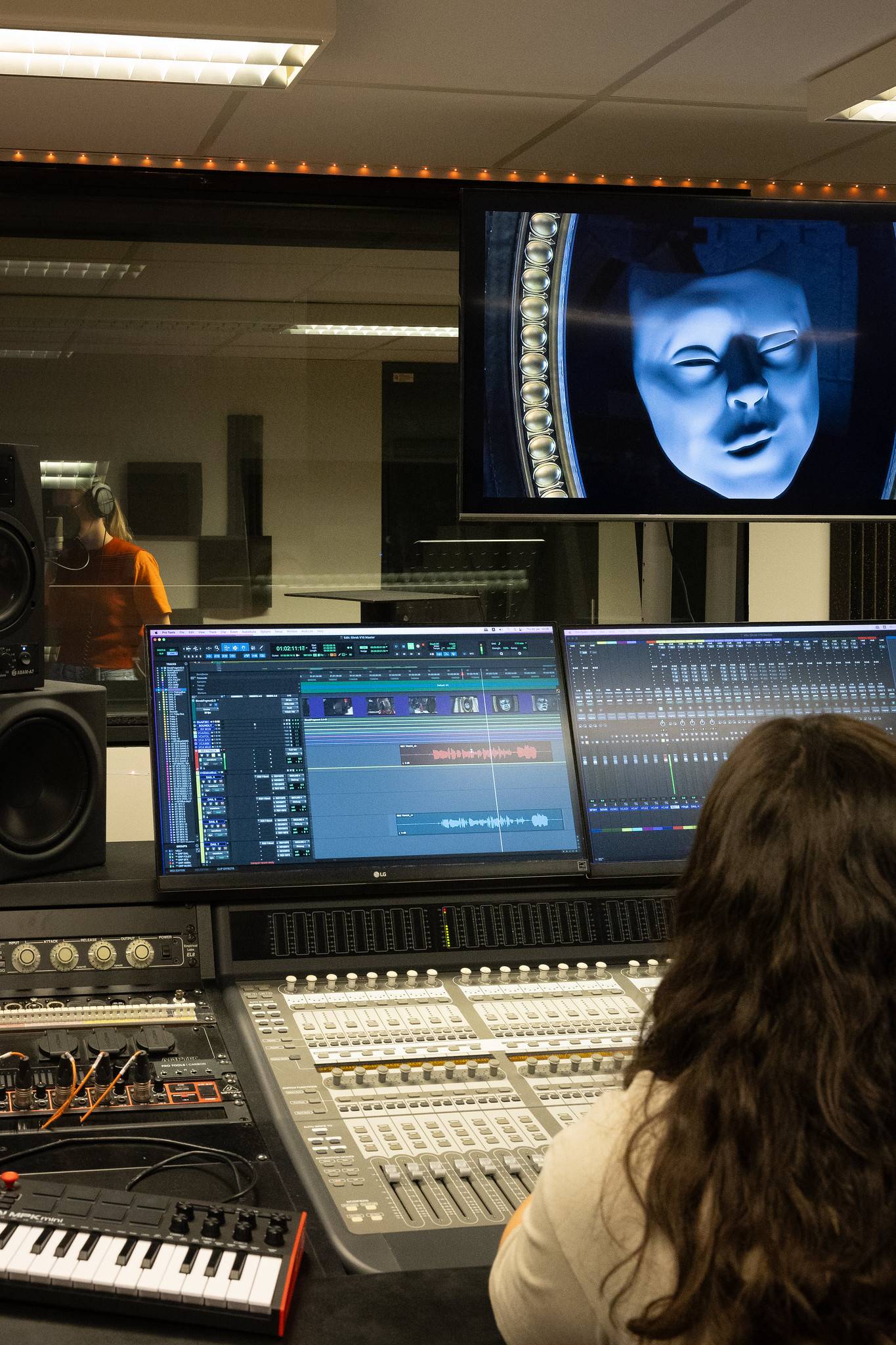
In our audiovisual workshops you enter a professional environment where image and sound come together.
You work in spacious film studios equipped with sound absorbing materials, suitable for both large-scale productions and intimate recordings. Combined with the camera, lighting and audio equipment available through the equipment lending service, you have everything you need to realise your audiovisual ideas both technically and creatively.
From recording to editing and colour grading: all spaces and equipment are tailored for students who want to develop their audiovisual projects with strong technical and creative skills.
As a LUCA student, you have access to every workshop across all LUCA campuses.
Welcome!
Discover the graduation projects of the past years
What do you need?
The program seeks independent students who are interested in the moving image, who are eager to learn and reflect on their practice and who enjoy working hard. It is necessary for you to have a background in filmmaking to attend and to be able to present a portfolio of screen works that you directed yourself.
You don’t need to own a camera or other hardware. You have access to a film studio, editing suites and an in-house service offering a wide and updated selection of filming, lighting and sound equipment, all available for check-out through online booking.
You have membership to an extensive library containing an up-to-date section on image culture and audiovisual arts.
Interested in this course?
Application & entry requirements
Enrollment procedure
The application and enrollment procedure at LUCA School of Arts consists in general of three steps.
- First you will have to submit an online Admissions application in which you will be asked to upload certain documents required for the Admissions’ diploma and language check. We will be checking if you meet with the diploma and language requirements.
- The second step continues with your participation in a Master Assessment.
- Step three is the final and binding (online) registration (for which you will receive a unique registration link after succeeding the Master Assessment).
Do you want to start a Master's degree at LUCA?
Then you must pass the MASTER ASSESSMENT
Where do you have class?
Facilities & campus life
Campus Sint-Lukas Brussels
Paleizenstraat 70
1030 Brussels
+32 2 250 11 00
An international campus and an added value to your programme
- A modern and open campus in one of Europe's foremost artistic hubs
- Studio's and workshops, a state of the arts lending service, high tech print rooms …
- A creative community with four educational institutions and over a thousand artist and designers
- An art library renowned for its collection in the country
- At walking distance of the Brussels North railway station
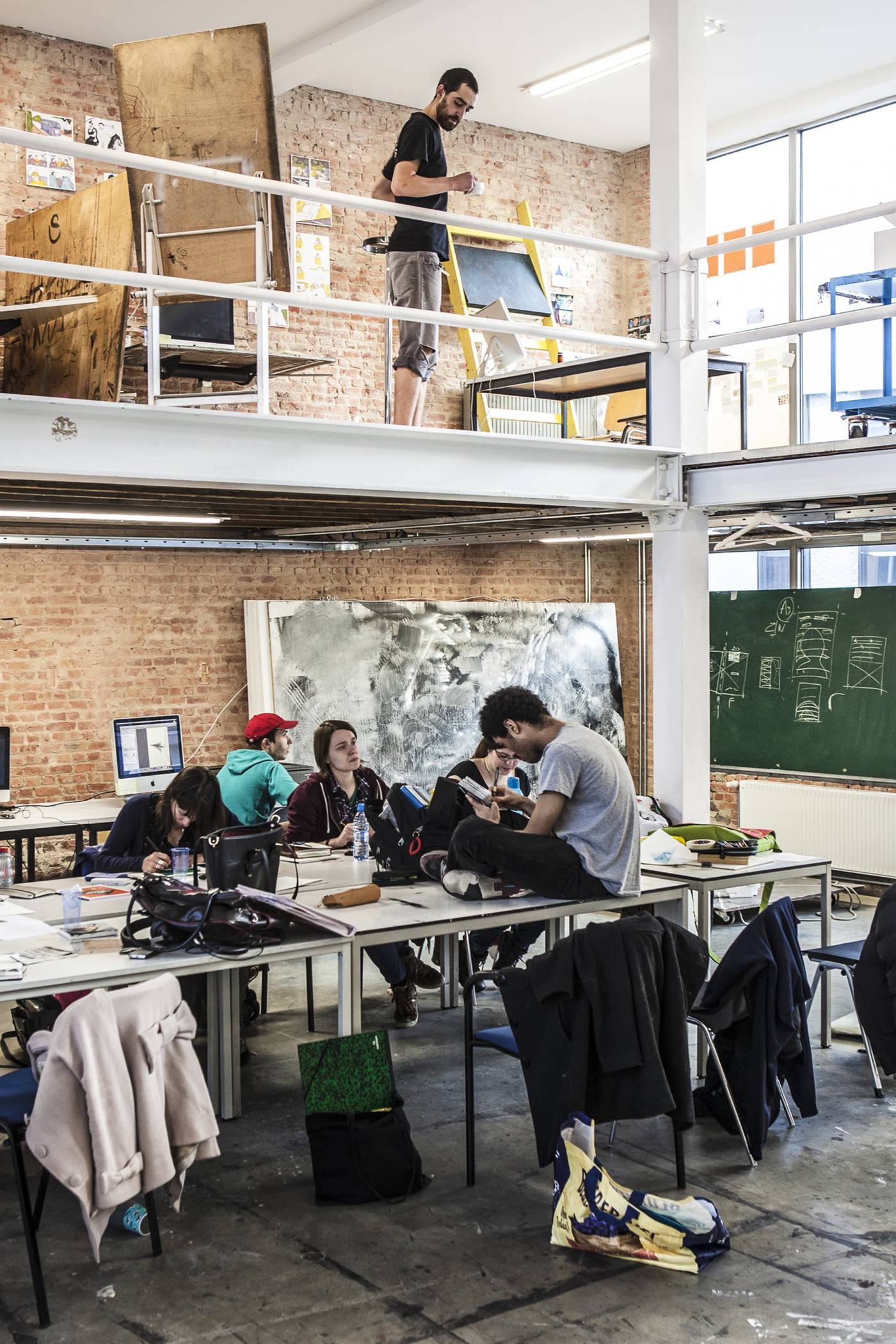
The MA program is located on the Sint-Lukas Campus in the city of Brussels. The capital’s patchwork of languages, cultures and religions, this complex and captivating European metropolis, is the school’s home base as well as its students’ base of operations.
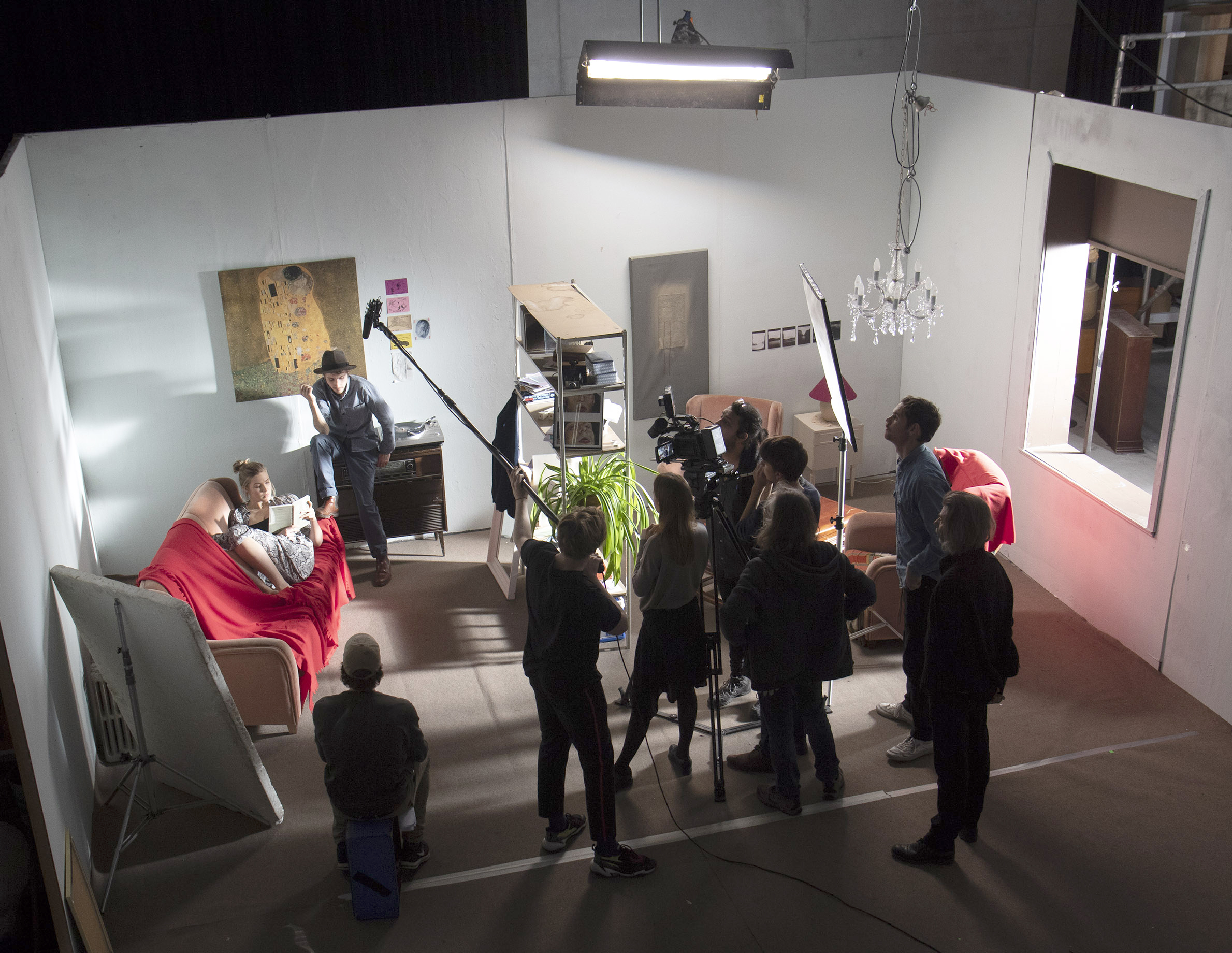
(Luc Compernol) Filmstudio op de campus
Further studies and career
Our goal is to train professional filmmakers whose understanding of artistic research and contemporary and the contemporary moving image is informed by a strong sense of aesthetics and ethics. The students we seek are those who want more than a skill: they are excited by the possibilities that audiovisual arts offer and want to work at the frontier of a changing field. At the successful completion of the program, you will receive an internationally recognized master’s degree in Audiovisual studies. This will prepare you for Ph.D. studies programs, you can start your own film/art practice or go to work for large and small companies in a wide range of industries including film and media, the art world and the non-profit.
Alumni
Throughout decades, the LUCA-Sint Lukas film program has developed a strong reputation delivering many alumni who belong, each in their own way, to the top of the Flemish as well as the international cinema, art and television world:
- Filmmakers Fien Troch (Home, Holly), Sofie Benoot (Victoria, Apple Cider Vinegar), Adil El Arbi en Bilall Fallah (Patser, Bad Boys for Life), Patrice Toye (Muidhond), Dorothée van den Berghe (Rosie & Moussa, Aller/Retour), Sahim Omar Kalifa (Zagros, Baghdad Messi), Robin Pront (D' Ardennen, Zillion), Bas Devos (Ghost Tropic, Here), Juanita Onzaga (Our Song To War, Floating with Spirits), Tim Mielants (De Patrick, WIL, Small Things Like These),
- Tv-makers Tim Mielants (Peaky Blinders), Jonas Govaerts (Tabula Rasa), Gilles Coulier (Bevergem, De Dag), Nathalie Basteyns & Kaat Beels (Beau Séjour, Clan), Guillaume Graux (Spul), Arnout Hauben (Ten Oorlog)
- Visual artists Anouk De Clercq, Kurt d’Haeseleer, Floris Vanhoof
- DOP Frank van den Eeden (Girl, De Patrick)
- Screenwriters Sanne Nuyens & Bert Van Dael (De Twaalf)
- Editor Nico Leunen (Rundskop, Beautiful Boy), Rik Chaubet (Soundtrack to a coup d'etat)
- Producers Antonino Lombardo, Frank Van Passel, Marc Goyens
Visit us
Are you curious about our approach to art education? During our open days, you will get all the information you need, visit the campus, talk to our teaching staff and students ... Still not convinced? Visit our graduation show! During this, on-campus two-day art festival you can experience first hand how good our students really are.
Staff
The core staff of the program consists of practicing filmmakers and film scholars. Teacher and tutors include Kersti Grunditz Brennan, Carmine Grimaldi, Herman Asselberghs, Sofie Benoot, Robbrecht Desmet, Christina Stuhlberger, Patrice Toye, Dorothée van den Berghe, Pascal Vandelanoitte en Tessel Veneboer.
Visiting artists and guest teachers are an integral part of the multifaceted program: since 2017 they include Olivier Assayas, Leni Huyghe, Frederik Nicolai, Emmy Oost, Kevin Jerome Everson, Virgil Vernier, Pieter Dumoulin & Timeau De Keyser, Marine Hugonnier, Johan Grimonprez, Michael Roskam, Daniel Hui, Patrick Keiller, Bertrand Bonello, Zohra Benhammou, Tom Van Imschoot and Joeri Verbesselt.
Trailer Muidhond, Patrice Toye, 2019
Video
Trailer Apple Cider Vinegar, Sofie Benoot, 2024
Interested in this course?
Quality is LUCA’s driving force
If the fundamental attitude of the policy plan implies that ‘quality is our driving force’, and that every aspect of the policy can be assessed against this, then LUCA undeniably aims to build and nurture a strong quality culture: a culture based on trust in people with talent and expertise, and aimed at valuing, inspiring, and improving.
The formal quality framework for study programmes within LUCA was named KOPERA, which stands for: Critically Analyzing the Quality of Study Programmes with Peers in Self-Direction.
For KOPERA, LUCA starts from a vision of quality assurance that stems from trust and is aimed at valuing, inspiring, and improving.
During the six-year KOPERA cycle, each study programme receives a panel of critical friends who review the implementation of the quality characteristics and examine how the programme contributes to the general LUCA policy.
The culmination of KOPERA is the ultimate assurance of programme quality. The core question here is: "does the study program have a good quality culture that follows the ‘plan-do-check-act’ cycle?"
LUCA publishes a quality sheet for every study program. You can find this on the 'Quality Assurance' page.
#WeArt