
Specialization in the international Master Visual Arts
60 ECTS / 1 year / English, Dutch
Sint
Sint
Photography in Brussels
English-taught Master
In the Master year Photography, you'll take one step further in the development of your artistic identity. Throughout the year you'll work on a MA project, guided by two mentors who will help you to broaden and enrich your horizons. You'll not only realise an artistic project but also write a thesis in which you reflect on your artistic practice.
Curriculum
Video
Master programme
The master graduate project
For your master graduate project, you choose your own artistic project. You realize this work and present it to a jury of internal and external experts during a public presentation. You contextualize your work with a thesis with which you situate your work within or against existing literature and debates. This proves that you can orient yourself within the field of the chosen artistic discipline.
For your master's thesis, you can make use of technical support and productional assistance and you rely on the advice of the tutors. Nevertheless, with your master's thesis, you prove that you work to a large extent independently.
In preparation for the master exhibition – which you organise together with fellow students off-campus – you will show your work to a wider public in an intermediate exhibition at the Recyclart art centre in Brussels.
During this process curiosity, independent initiative and a passion for experimentation will drive your artistic inquiry. You'll discover new strategies and unique methods. By openly communicating about evolutions and doubts during your work process, you'll bring your projects to a successful conclusion.
Alongside these theoretical seminars and seminars, you will also visit exhibitions and take part in workshops. Through portfolio viewings with nationally and internationally recognised artists, art critics and curators you'll discover new perspectives.
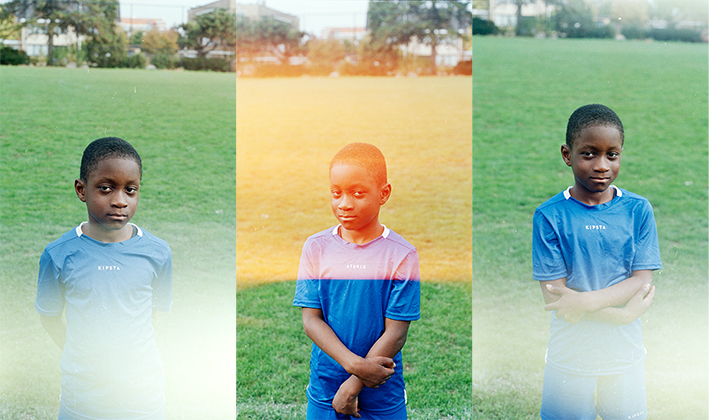
Darwin Taday Cabrera
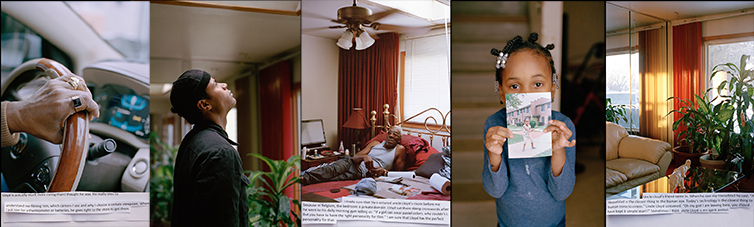
Ines Vansteenkiste Muylle
Master Electives
The Master electives form an important part of the Master's programme. LUCA offers a rich and diverse range of research courses, supported by the research units of our campuses in Brussels, Ghent, Genk, and Leuven. In doing so, each campus develops its own research practice, tradition, and thematic focus.
You choose two electives that align with your interests and professional ambitions. Additionally, you may take an elective offered by KU Leuven or its association partners.
Video
Discover LUCA’s workshops
In our photography workshops you immerse yourself in the world of analogue photography.
You develop and print both black-and-white and colour film in a studio fully dedicated to craftsmanship and experimentation.
In addition, professionally equipped studios are at your disposal, featuring high-end cameras, powerful studio lighting and specialised hardware and software — perfect for photographic projects, experiments and productions.
You also have access to advanced film scanners and professional (large-format) printers to scan, edit and print your work in the highest quality.
As a LUCA student, you have access to every workshop across all LUCA campuses.
Welcome!

Interested in this course?
Application & entry requirements
Enrollment procedure
The application and enrollment procedure at LUCA School of Arts consists in general of three steps.
- First you will have to submit an online Admissions application in which you will be asked to upload certain documents required for the Admissions’ diploma and language check. We will be checking if you meet with the diploma and language requirements.
- The second step continues with your participation in a Master Assessment.
- Step three is the final and binding (online) registration (for which you will receive a unique registration link after succeeding the Master Assessment).
Do you want to start a Master's degree at LUCA?
Then you must pass the MASTER ASSESSMENT
Where do you have class?
Facilities & campus life
Campus Sint-Lukas Brussels
Paleizenstraat 70
1030 Brussels
+32 2 250 11 00
An international campus and an added value to your programme
- A modern and open campus in one of Europe's foremost artistic hubs
- Studio's and workshops, a state of the arts lending service, high tech print rooms …
- A creative community with four educational institutions and over a thousand artist and designers
- An art library renowned for its collection in the country
- At walking distance of the Brussels North railway station
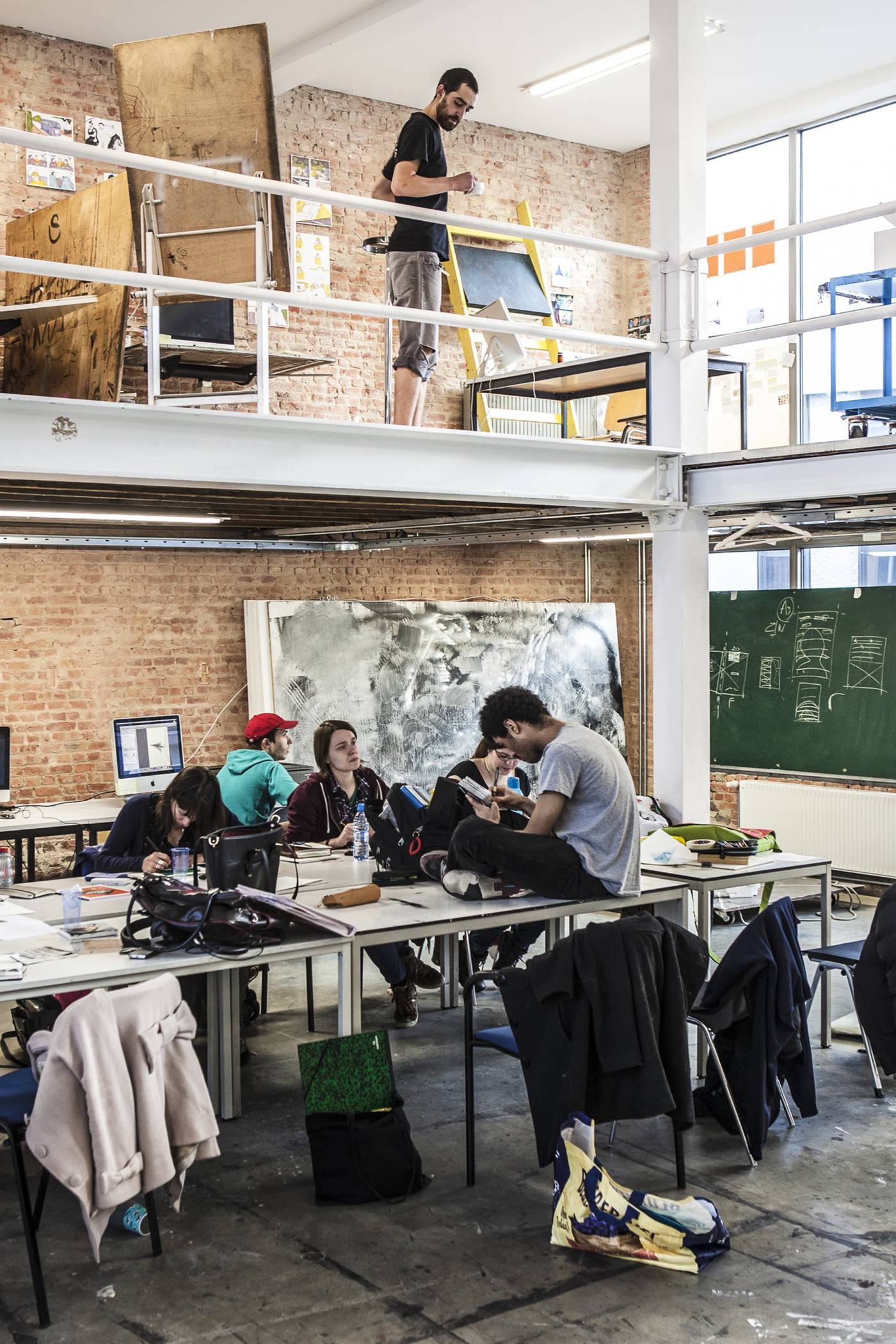
A well equiped lending service and a studio specialised in analogue photography
Our campus has a studio specialised in analogue photography. With its extensive infrastructure, various cameras and expertise, it offers you a range of artistic possibilities. It is unique within the landscape of contemporary art colleges.
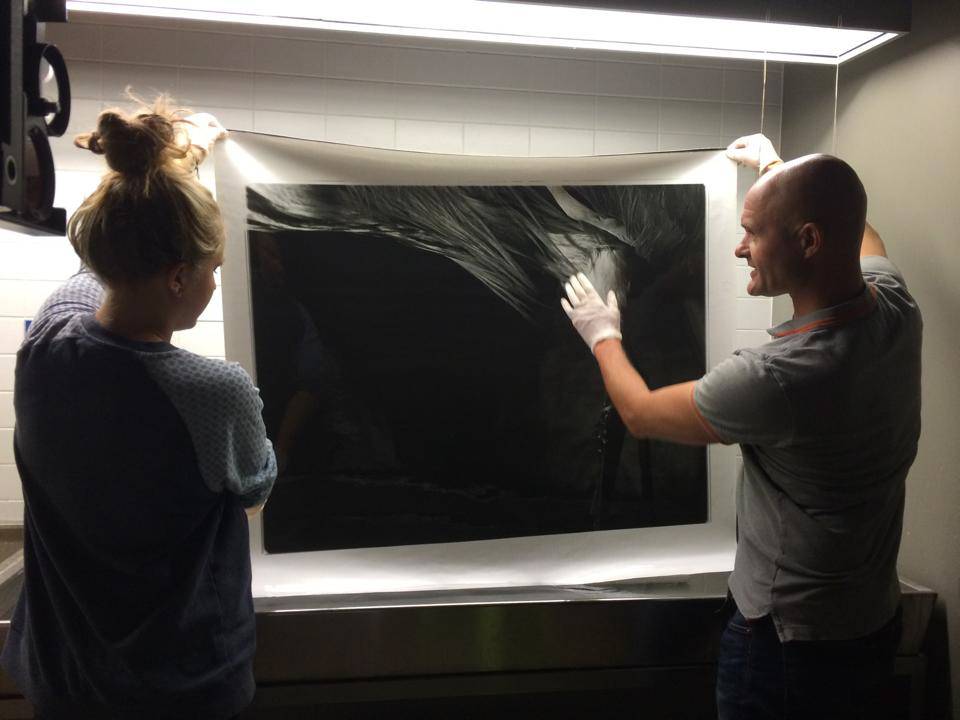
Fotografie Sint-Lukas Brussel
Brussels, an artistic hub
Our campus is situated within the dynamic context of Brussels. This diversity creates new avenues of thought and leads to a challenging artistic process. Surrounded by students from Belgium and abroad you'll be confronted by other realities that shift your boundaries. The international character of the master is also felt during the final master exhibition when an external and partly international jury will judge your work.
Contact
Heb je nog vragen? Contacteer ons vrijblijvend op bk.brussel@luca-arts.be
Paleizenstraat 70 / 1030 Brussels / +32 2 250 11 00 / facebook / Instagram
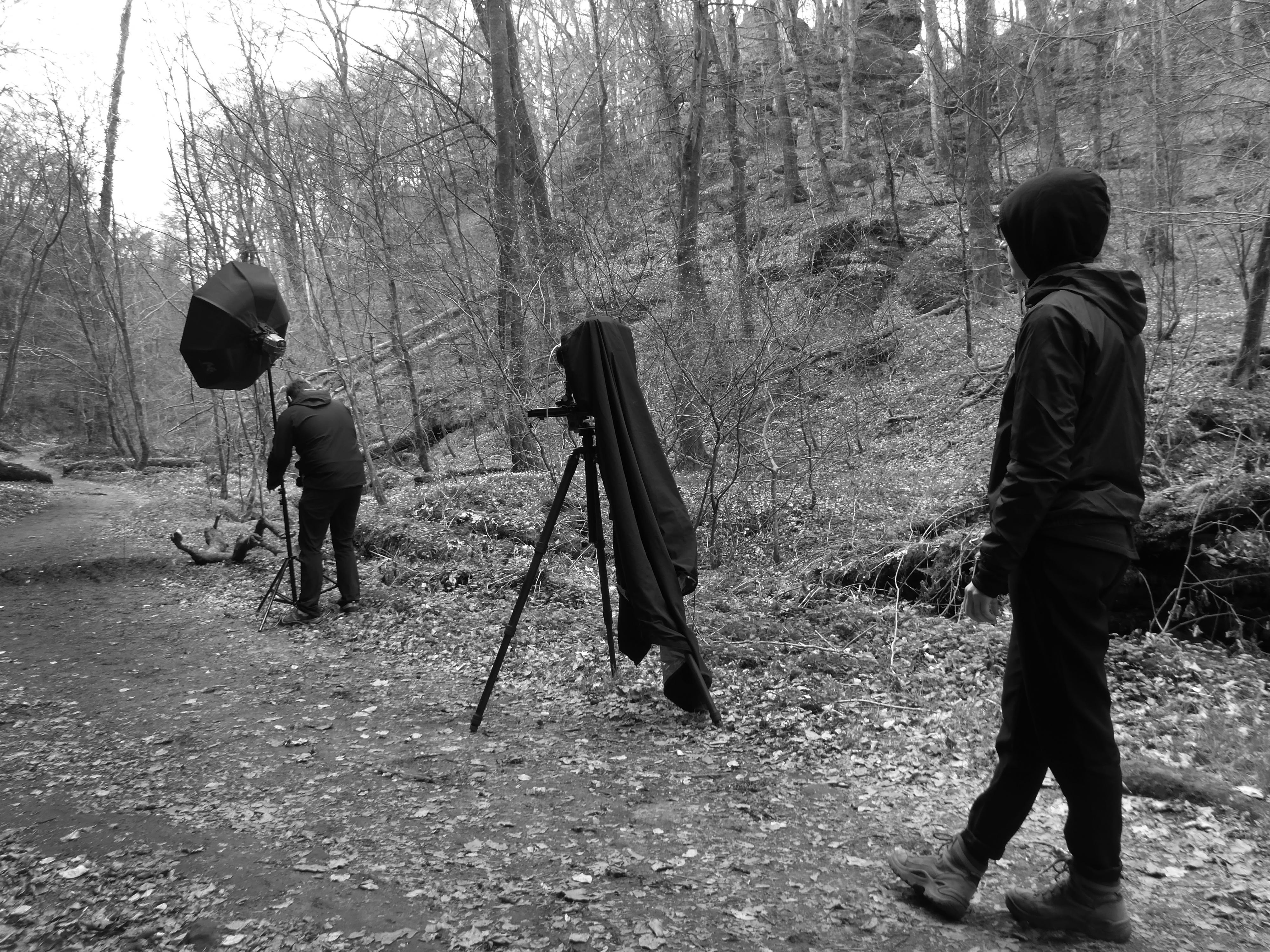
Fotografie Sint-Lukas Brussel
Further studies and career
As a master in Photography, an exciting course awaits you. The technical and intellectual skills you acquired, will enable you to further develop your artistic identity within the art field and this far beyond your studies. Our alumni prove this. Whether you just walk around the street, open a newspaper or visit exhibitions, you will find work by our (former) students everywhere.
Start your career as a photographer
Miles Fischler, Ines Vansteenkiste Muylle and Eva Donckers publish in magazines and newspapers.
They launch crowdfunding campaigns to publish their own photo books. This year Melvin Podolski published Skritpark, Maria Dabrowski launched Odslonic and Bastiaan Van Aarle publishes 01:20.
Jim Campers exhibited in museum M in Leuven and Julie Scheurwegs in Botanique in Brussels. Emre Celikan went to work with a gallery in Paris. Lisa Haesevoets makes a world trip in a converted camper and brings the most beautiful images. Besma Ben Said, Lola Pertsowsky, Maité De Bievre run a photographic workshop in City Gate, a major artistic hub for artists in Brussels. Diana Tamane became a resident at Hisk after our training and today exhibits at international biennales. She publishes her first artist's book at APE.
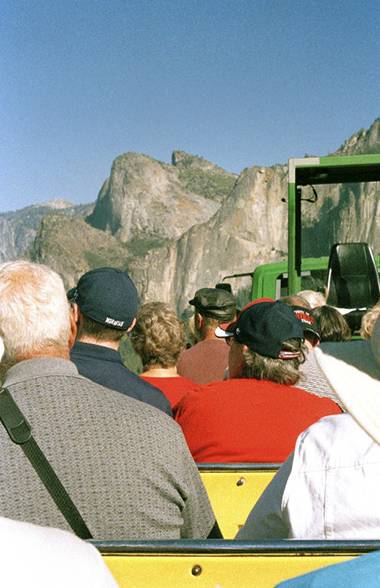
Miles Fischler
Some of our alumni: Annemie Augustijns, Johanna Baschke, Eva Beazar, Besma Ben Said, Jim Campers, Emre Celikan, Alina Cristea, Anne Daems, Axel De Marteau, Tim Dirven, Eva Donckers, Miles Fischler, Nick Geboers, Geert Goiris, Antoine Grenez, Gaia Kaboukos, Catherine Lemblé, Renée Lorie, Melanie Matthieu, Bart Michiels, Els Opsomer, Isabelle Pateer, Lola Pertsowsky, Dries Segers, Julie Scheurweghs, Arne Schmitt, Diane Tamane, Bastiaan van Aarle, Dieter Van Caneghem, Stephan Vanfleteren, Sarah Van Marcke, Sine Van Menxel, Ines Vansteenkiste-Muylle, Franky Verdickt, Alexandra Verhaest, Danny Veys, Erien Withouck, Ugo Woatzi en Marie Wynants.
The year at LUCA School of Arts, Master Photography, helped me to redefine my thinking and practice as an artist. I am especially grateful for the generosity of the professors, which has been continuous even after graduation.
Sepideh Farvardin - Graduate Master Photography 2019
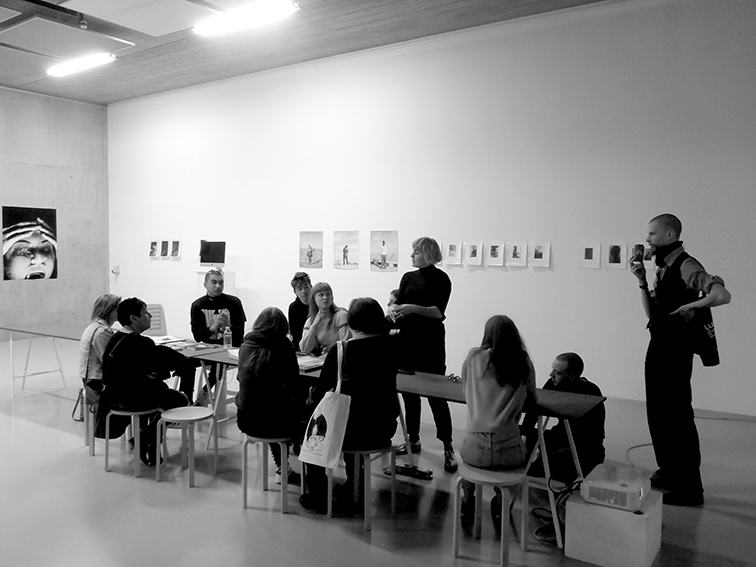
Infodagen: Meet & Greet met studenten- Fotografie Sint-Lukas Brussel
Visit us
Are you curious about our approach to art education? During our open days, you will get all the information you need, visit the campus, talk to our teaching staff and students ... Still not convinced? Visit our graduation show! During this, on-campus two-day art festival you can experience first hand how good our students really are.
Staff
During your program you will be coached by a diverse and enthusiastic team of lecturers. Their strength is that they themselves are photographers, visual artists, writers or curators active in the field of contemporary art and photography. For example, Ana Torfs is participating in group exhibitions at Kunstmuseum Bonn (April 11 – May 18, 2025) and Le Forum, Hermès Foundation in Tokyo (opening July 17, 2025). Additionally, she is working on a solo exhibition at the Paintings Gallery of the Academy of Fine Arts in Vienna, opening on October 2, 2025. Aglaia Konrad has a solo exhibition at Secession in Vienna (March 8 – May 18, 2025). Her most recent publications include Alina, Barbara, Halina, Helena, Zofia (CCA Singles, 2024) and Japan Works (Roma Publications, 2021). In recent years, Els Opsomer has completed residencies in Thiès and Dakar (Senegal), Elfonissos (Greece), Bucharest (Romania), Amsterdam Noord (Netherlands), Berlin (Germany), Hospice Brussels, and the Frans Masereel Center in Kasterlee, where she is working on her doctoral project titled I See, I See What You Don’t See – On the Visible Invisible in Times of ‘Global’ Terror. In April 2025, she will participate in the symposium Does Security Have a Future? Speculation and Belonging in the Age of Catastrophes, organized by Deradicalizing the City (Brussels). Recently, her work was shown in Fort Beau (Cinematek, Brussels, 2024) and Choking Flames: Els Opsomer & Ermias Kifleyesus (Kusseneers Gallery, Molenbeek, 2023). In his current artistic practice, Danny Veys uses a canoe to photograph remote and untouched landscapes in a slow and experimental manner. His publication The Flaxcanoe Floats on the Golden River (2024) is the result of his research into the stories and history of the Leie River—a project he is now continuing in the regions of the Yser, Aa, Somme, and Meuse rivers. Additionally, he is creating new work at the archaeological site of Pergamon (Turkey), which will culminate in a 2027 exhibition marking 150 years of German excavations. Sarah Van Marcke started a PhD project in 2024 on the history and representation of nature reserves, for which she is undertaking an extended artist residency in the UK, near Leeds. She is also preparing a solo exhibition at Botanique in Brussels (2025). Sine Van Menxel created the artist’s book A Table under a Tree (Royal Academy of Fine Arts - Hopper & Fuchs, 2023). A selection of photograms from this series was exhibited at the Raveel Museum (Machelen-aan-de-Leie) and the Royal Academy of Fine Arts in Antwerp. Between 2020 and 2024, Liesbeth Decan led a research project on the Polish-Belgian artist Tapta, resulting in three exhibitions (at Arton Foundation, Warsaw; WIELS, Brussels; and Muzeum Susch, Switzerland) and three books published by Arton Foundation, Mousse Publishing, and Hatje Cantz. In March 2025, Eva Van Tongeren will present her new film Les mains qui travaillent (2024) at Art Cinema OFFoff in Ghent.
In addition to lecturers such as Liesbeth Decan, Jan Theo de Jager, Aglaia Konrad, Melanie Matthieu, Wendy Morris, Els Opsomer, Ronny Smedts, Ana Torfs, Mitja Tušek, Kris Van Beek, Sarah Van Marcke, Sine Van Menxel, Eva Van Tongeren, Maarten Vanvolsem, and Danny Veys, you will also have the opportunity to engage with external artists and curators through guest lectures, talks, and workshops.
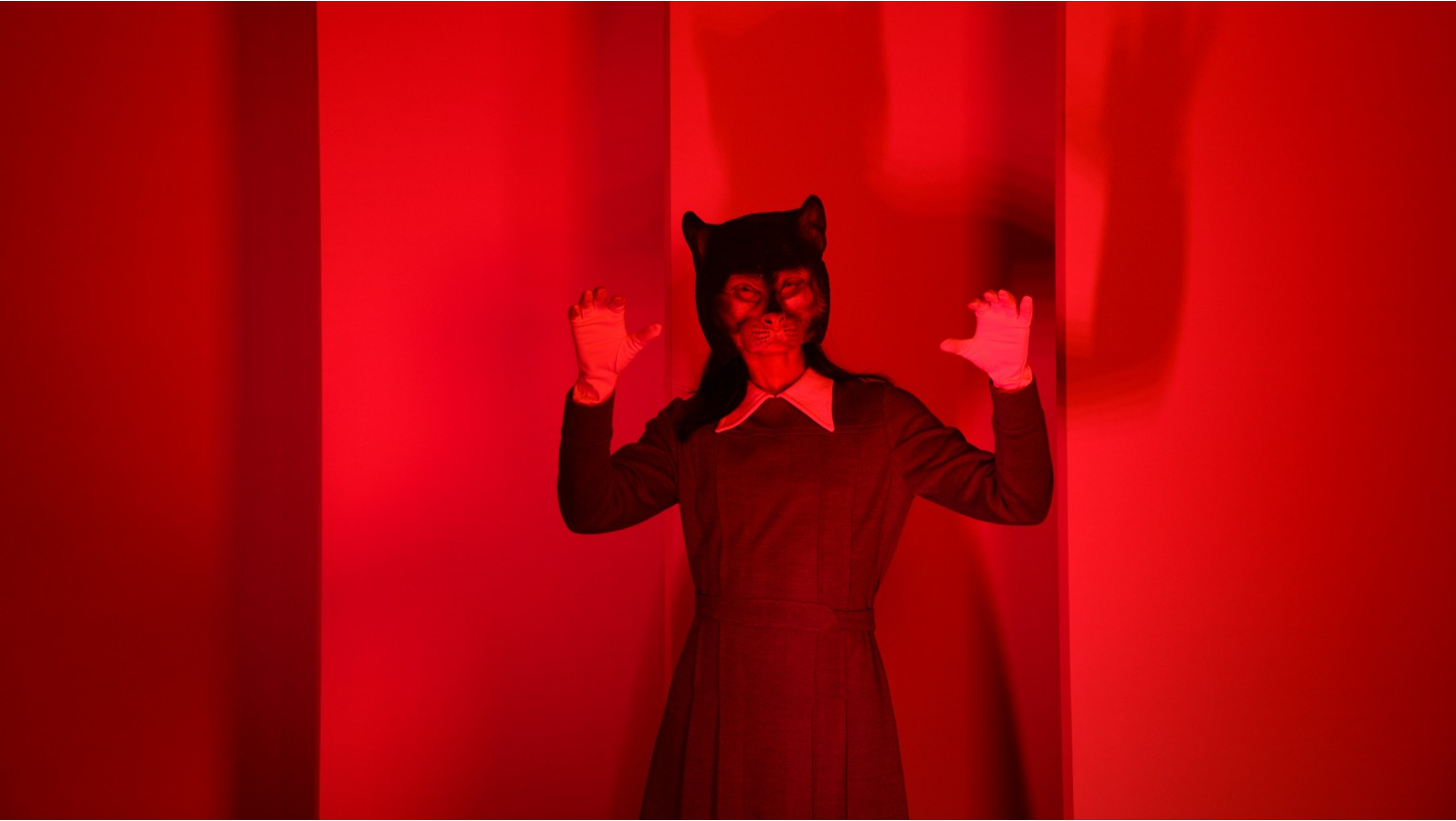
Ana Torfs, Sideshow, 2019
Interested in this course?
Quality is LUCA’s driving force
If the fundamental attitude of the policy plan implies that ‘quality is our driving force’, and that every aspect of the policy can be assessed against this, then LUCA undeniably aims to build and nurture a strong quality culture: a culture based on trust in people with talent and expertise, and aimed at valuing, inspiring, and improving.
The formal quality framework for study programmes within LUCA was named KOPERA, which stands for: Critically Analyzing the Quality of Study Programmes with Peers in Self-Direction.
For KOPERA, LUCA starts from a vision of quality assurance that stems from trust and is aimed at valuing, inspiring, and improving.
During the six-year KOPERA cycle, each study programme receives a panel of critical friends who review the implementation of the quality characteristics and examine how the programme contributes to the general LUCA policy.
The culmination of KOPERA is the ultimate assurance of programme quality. The core question here is: "does the study program have a good quality culture that follows the ‘plan-do-check-act’ cycle?"
LUCA publishes a quality sheet for every study program. You can find this on the 'Quality Assurance' page.
#WeArt