

Erasmus Mundus Master in Design & Health_Care
120 ECTS / 2 year - Genk - Aveiro - Sheffield / English
LUCA Genk
Europa
LUCA Genk
Europa
Response_Able Futures
Joint Master
Response_Able Futures is a two-year, joint master's programme in Design and Health_Care; created to tackle growing global challenges: socioeconomic shifts, digital transformation, ageing populations, and a rising need for inclusive health services. It's the first EMJM programme of its kind focused on design and healthcare and engages three central themes: designing with care communities, for care communication, and understanding care systems, aiming to use design as a tool for social change.

Curriculum
Response_Able Futures, the first ever European Erasmus Mundus Joint Master in Design and Health_Care.
This unique Joint Master Programme is split between three art universities in three different European countries: LUCA School of Arts campus Genk / C-mine (Belgium), the University of Aveiro in Aveiro (Portugal) and Sheffield Hallam University in Sheffield (United Kingdom).
You study in three countries over two years (four semesters), with master classes from some of the world’s leaders in design and care-based, social innovation.
The course is entirely taught in English. Click here for an overview of the Response_Able Futures course curriculum.
About LUCA School of Arts
LUCA School of Arts is the only University of Applied Sciences (and Arts ) in Flanders exclusively dedicated to art and design, making it unique in the region. As a School of Arts LUCA combines the strengths and expertise of five renowned Flemish higher education institutions for art and design, spread across Brussels, Genk, Ghent and Leuven. LUCA also gives form to the associated Faculty of Arts of the KU Leuven which is an intensive collaboration between LUCA School of Arts and KU Leuven. Whereas LUCA, as a college, is responsible for bachelor and master degrees in the arts, KU Leuven, as a university, is authorized for doctorates. Artistic research is therefore situated at a crossroads, which explains the faculty's associated status. It is an "in-between space", in which the assets of the School of Arts and the Research University reinforce each other. LUCA participates as such on the open day of the KU Leuven. LUCA will be presenting its even full-English MA programmes on its campuses in Brussels, Genk, Ghent and Leuven.
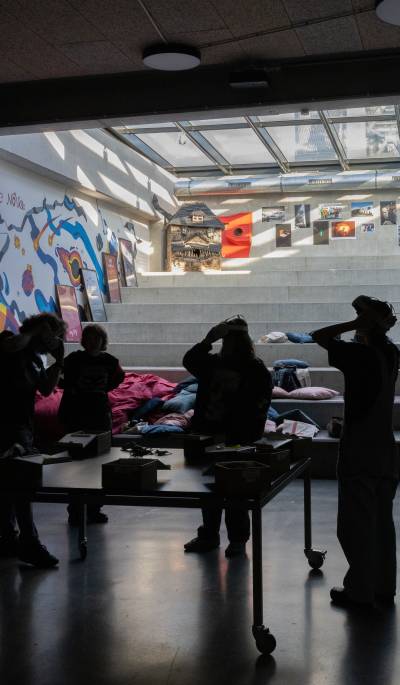
In our workshops, you will find a rich and versatile environment where ideas can grow and take shape.
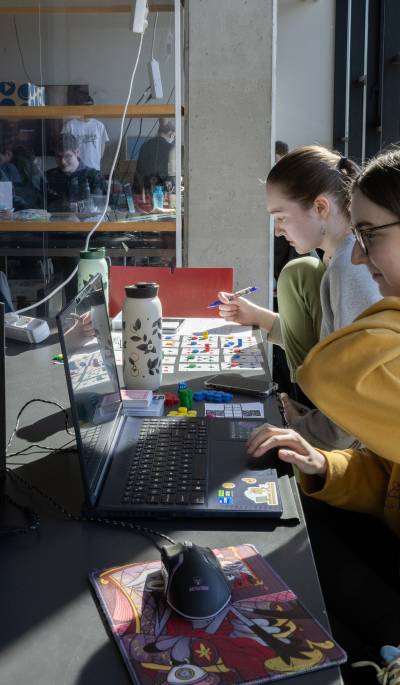
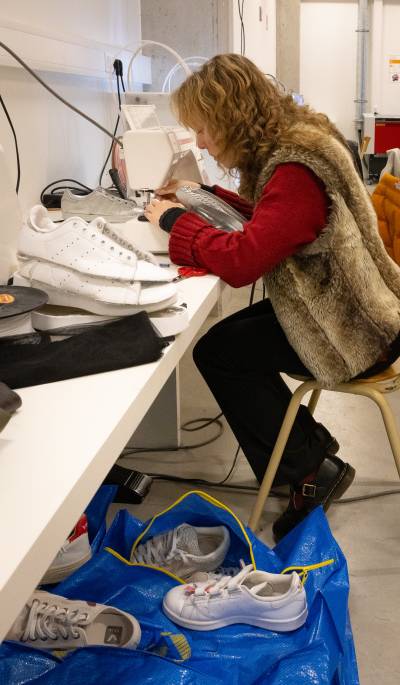
Whether you work with glass, textiles or ceramics, or immerse yourself in digital practices such as 3D, VR and film, our maker spaces and specialised studios offer the space, tools and guidance to develop your artistic vision.
You work with both traditional crafts and advanced technologies, and you are encouraged to experiment, explore boundaries and acquire new skills.
Students also have access to all workshops across the different LUCA campuses.
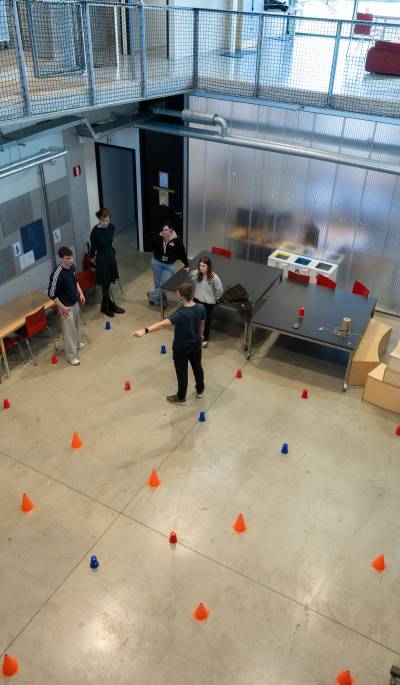
Within this open and stimulating context, you collaborate with fellow students, learn from each other’s expertise, and build projects that emerge from research, imagination and the joy of making.
More information about our different workshops

Interested in this course?
Application & entry requirements
Applications are open each year in the autumn for the following September start. Check the programme website for more details.
Who can apply?
Response_Able Futures is open to European and non-European students with an internationally recognised bachelor’s degree in design (minimum of 180 ECTS credits). Diplomas in different study areas are accepted for applicants with relevant professional experience in design.
More information about the admission requirements
Where do you have class?
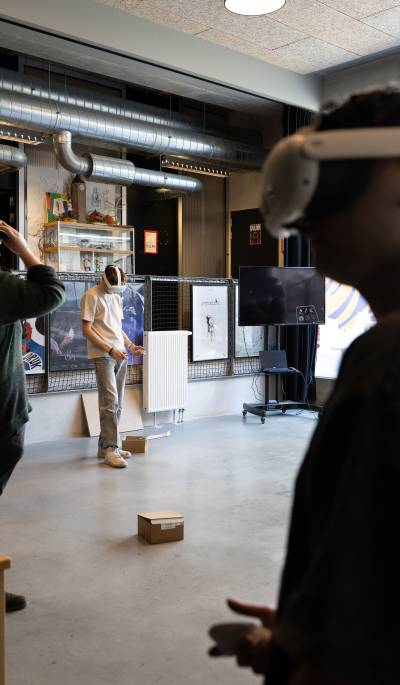
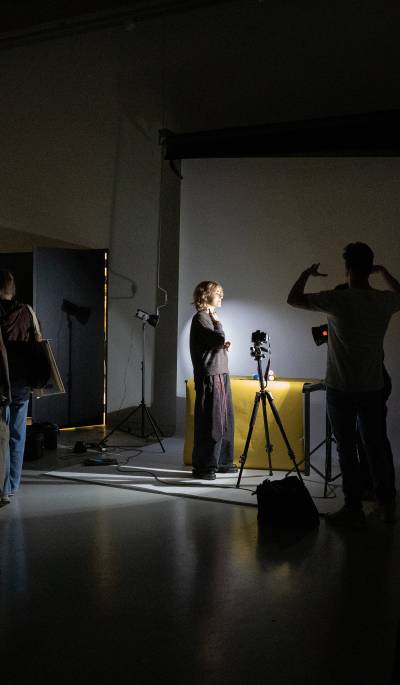
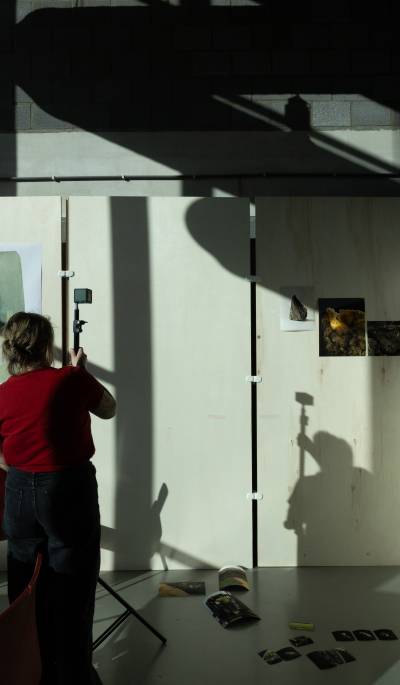
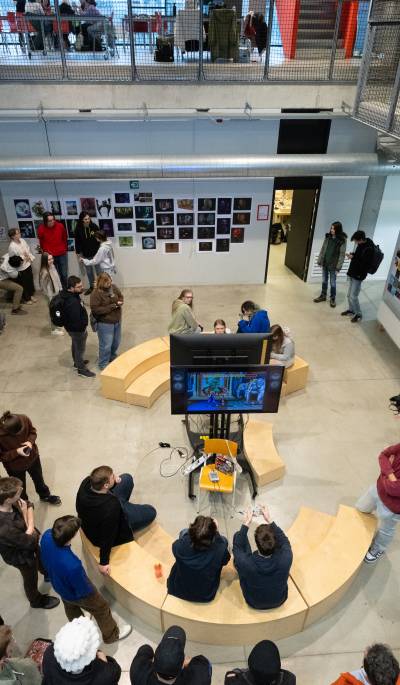
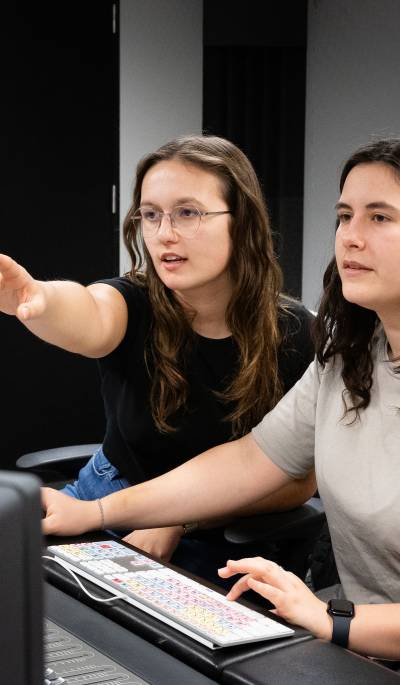
Facilities & campus life
The mobility presented within this course planning is central to the Response_Able Futures programme and is mandatory. Students work and move together during these two years. During the first semester, the students work together in Belgium, followed by a move for the second semester to Portugal and after the summer holiday, to the third semester in the UK. For the final semester, students are supported in selecting a host university between LUCA, UA and SHU, with an even spread between the three countries.
If the student's final project involves an organisation or company in a country outside of the three consortium countries, the organisation must become an official Associated Partner institution of Response_Able Futures. In this exceptional case (which needs to be approved by the consortium), students can spend their final semester in the relevant country.
- 1st semester: Belgium (LUCA School of Arts, Genk)
- 2nd semester: Portugal (University of Aveiro, Aveiro)
- 3rd semester: UK (Sheffield Hallam University, UK)
- 4th semester: students develop the Final Project in LUCA, UA or SHU
Interested in this course?
Quality is LUCA’s driving force
If the fundamental attitude of the policy plan implies that ‘quality is our driving force’, and that every aspect of the policy can be assessed against this, then LUCA undeniably aims to build and nurture a strong quality culture: a culture based on trust in people with talent and expertise, and aimed at valuing, inspiring, and improving.
The formal quality framework for study programmes within LUCA was named KOPERA, which stands for: Critically Analyzing the Quality of Study Programmes with Peers in Self-Direction.
For KOPERA, LUCA starts from a vision of quality assurance that stems from trust and is aimed at valuing, inspiring, and improving.
During the six-year KOPERA cycle, each study programme receives a panel of critical friends who review the implementation of the quality characteristics and examine how the programme contributes to the general LUCA policy.
The culmination of KOPERA is the ultimate assurance of programme quality. The core question here is: "does the study program have a good quality culture that follows the ‘plan-do-check-act’ cycle?"
LUCA publishes a quality sheet for every study program. You can find this on the 'Quality Assurance' page.
#WeArt